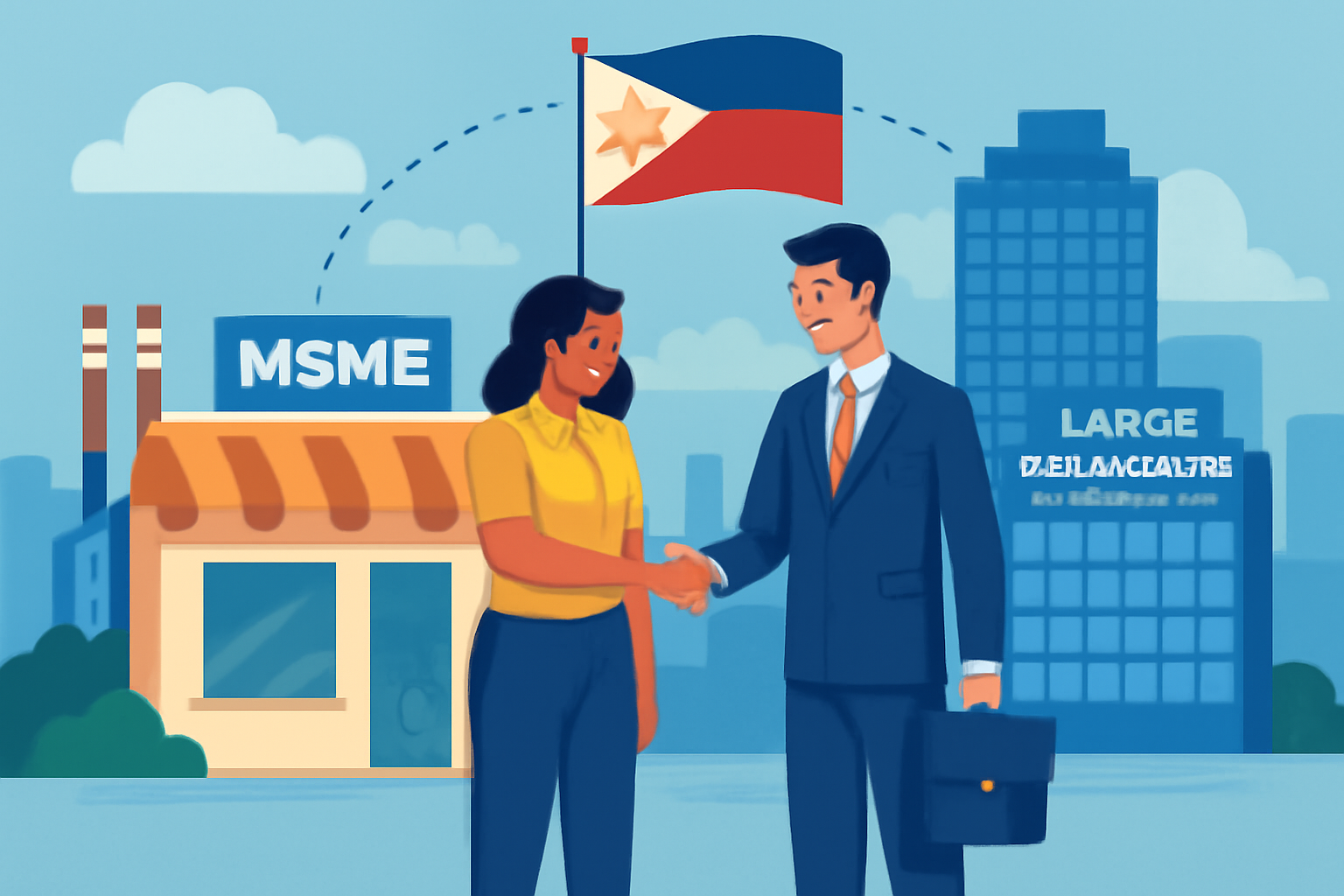
In the Philippines, the relationship between Micro, Small, and Medium Enterprises (MSMEs) and large corporations has become an essential element for driving economic growth. MSMEs make up a significant part of the country’s economic structure, but they often face numerous challenges, such as limited market access and financial constraints. Large corporations, on the other hand, have vast resources, networks, and expertise that can be transformative for smaller businesses. This unique partnership dynamic is providing opportunities for innovation, market expansion, and sustainable growth.
One of the primary advantages of collaboration between MSMEs and large corporations is the ability to enter larger markets. Large corporations have established brand recognition and consumer trust, which can be invaluable for MSMEs looking to grow their customer base. Through strategic collaborations, MSMEs can get their products in front of a broader audience, which may have otherwise been impossible due to limited marketing budgets and distribution capabilities. For example, MSMEs in the garment industry can work with multinational brands to supply locally made clothing, expanding their reach both domestically and internationally.
Another critical factor is the opportunity for skill development. MSMEs, especially those in rural or less developed areas, often lack the technical know-how required to stay competitive. By collaborating with large corporations, they gain access to training programs, mentorship, and knowledge-sharing initiatives that can help them improve their business practices. For instance, large corporations might assist in streamlining MSME production processes, offering advice on how to improve efficiency, reduce waste, and increase profit margins.
Furthermore, these collaborations encourage innovation. MSMEs tend to be more flexible and agile, which allows them to quickly adapt to changing market demands. They often develop creative solutions and products that large corporations may not be able to produce on their own. In return, large corporations can provide funding, advanced technology, and access to international markets, enabling MSMEs to scale their innovations. This collaboration fosters a culture of innovation, which is crucial in staying competitive in an increasingly globalized economy.
Additionally, MSMEs benefit from the corporate social responsibility (CSR) programs that large corporations often run. These programs can focus on community development, environmental sustainability, or ethical labor practices. By partnering with these large firms, MSMEs can access funding and resources to integrate sustainable practices into their operations. This not only benefits the businesses but also contributes to broader social and environmental goals, which is crucial for long-term growth.
Moreover, the Philippine government plays an instrumental role in facilitating these collaborations. With various policies and programs in place, the government has created a supportive ecosystem for MSMEs and large corporations to collaborate. Initiatives such as tax incentives, government grants, and partnerships with business incubators have made it easier for MSMEs to connect with larger firms. This collaborative environment fosters sustainable business practices and allows both sectors to thrive.
Ultimately, the collaboration between MSMEs and large corporations in the Philippines creates a mutually beneficial relationship that drives economic development. By leveraging the strengths of both sectors, the Philippines can ensure sustainable growth, increased innovation, and a more competitive market position globally.