
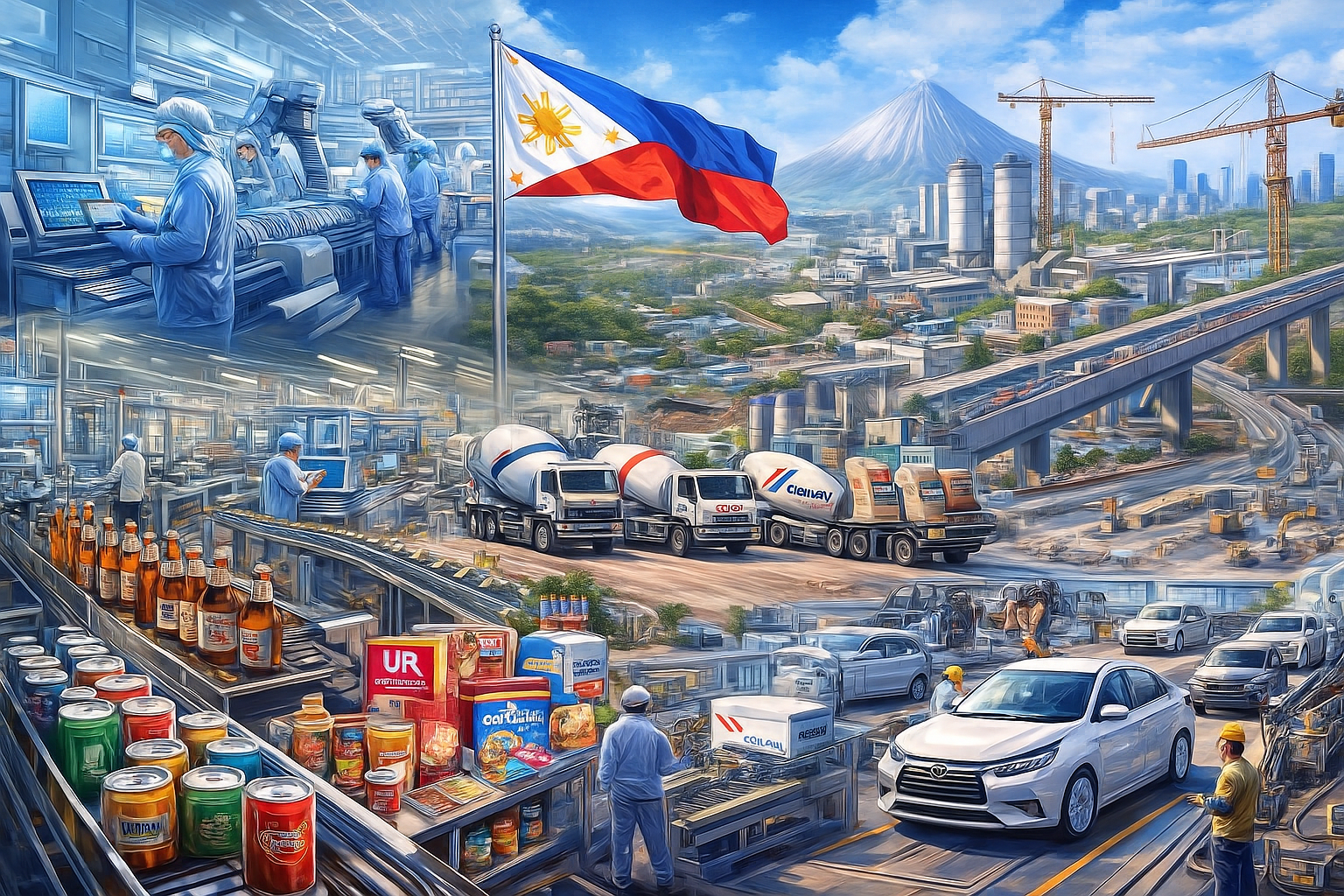
Manufacturing in the Philippines plays a central role in job creation, technology transfer, and export earnings. While small and medium enterprises are numerous, a core group of large companies and multinational subsidiaries provide the backbone of the sector. They operate in key industries such as semiconductors, food, beverages, and building materials, each contributing uniquely to the country’s industrial base.
In semiconductors and electronics, the Philippines has carved out a niche as a reliable assembly and test hub. Texas Instruments Philippines is frequently cited among the country’s biggest exporters, with facilities producing chips that end up in consumer gadgets, industrial devices, and automotive systems. Analog Devices and ON Semiconductor reinforce this strength by manufacturing advanced components used in power management, signal processing, and sensing technologies. These companies are typically located in specialized economic zones, where they benefit from infrastructure, tax incentives, and streamlined customs procedures. They also collaborate with local universities and training centers to build a pipeline of engineers and technicians.
The food and beverage industry showcases the influence of large Filipino conglomerates on the daily lives of consumers. San Miguel Corporation stands out with a broad portfolio that spans beer, soft drinks, processed meats, dairy products, and more. Its manufacturing plants, strategically dispersed across the country, ensure efficient distribution and consistent supply. Universal Robina Corporation has become a leader in snack foods and beverages, with brands that have made inroads into markets in Indonesia, Vietnam, and other parts of Asia. Monde Nissin adds depth to the sector through its dominance in instant noodles, biscuits, and meat-free products, reflecting evolving consumer tastes.
International players reinforce this domestic manufacturing base. Nestlé Philippines exemplifies how a global company can integrate into local supply chains. It operates factories producing coffee, milk, and culinary essentials, many of which are household staples. By working with local farmers and suppliers, Nestlé supports rural communities and encourages improved agricultural practices and quality standards. These linkages help bridge the gap between primary production and modern, large-scale processing.
In construction materials, several firms have become synonymous with the country’s infrastructure boom. Holcim Philippines, CEMEX Holdings Philippines, and Republic Cement maintain cement plants across Luzon, Visayas, and Mindanao. Their products are essential for public works, real estate developments, and commercial projects. These companies invest not only in production capacity but also in environmental technologies such as waste heat recovery systems and alternative fuels, aiming to reduce emissions and improve energy efficiency.
The automotive and parts sector adds another dimension to Philippine manufacturing. Although not as large as some regional hubs, it includes assembly operations and a robust component supply base. Toyota Motor Philippines and Mitsubishi Motors Philippines operate assembly lines that supply vehicles to Filipino consumers, supported by local suppliers of parts, including wire harness makers, interior components, and metal parts. Firms linked to global groups such as Yazaki and Sumitomo Wiring Systems produce wire harnesses that are exported to automotive plants in other countries.
Across these industries, leading manufacturers in the Philippines face similar challenges and opportunities. They must continuously upgrade facilities, invest in workforce skills, and adopt more sustainable practices while remaining price competitive. Their success strengthens the country’s position in regional value chains and offers a pathway for the broader economy to move toward higher value-added activities in the years to come.