
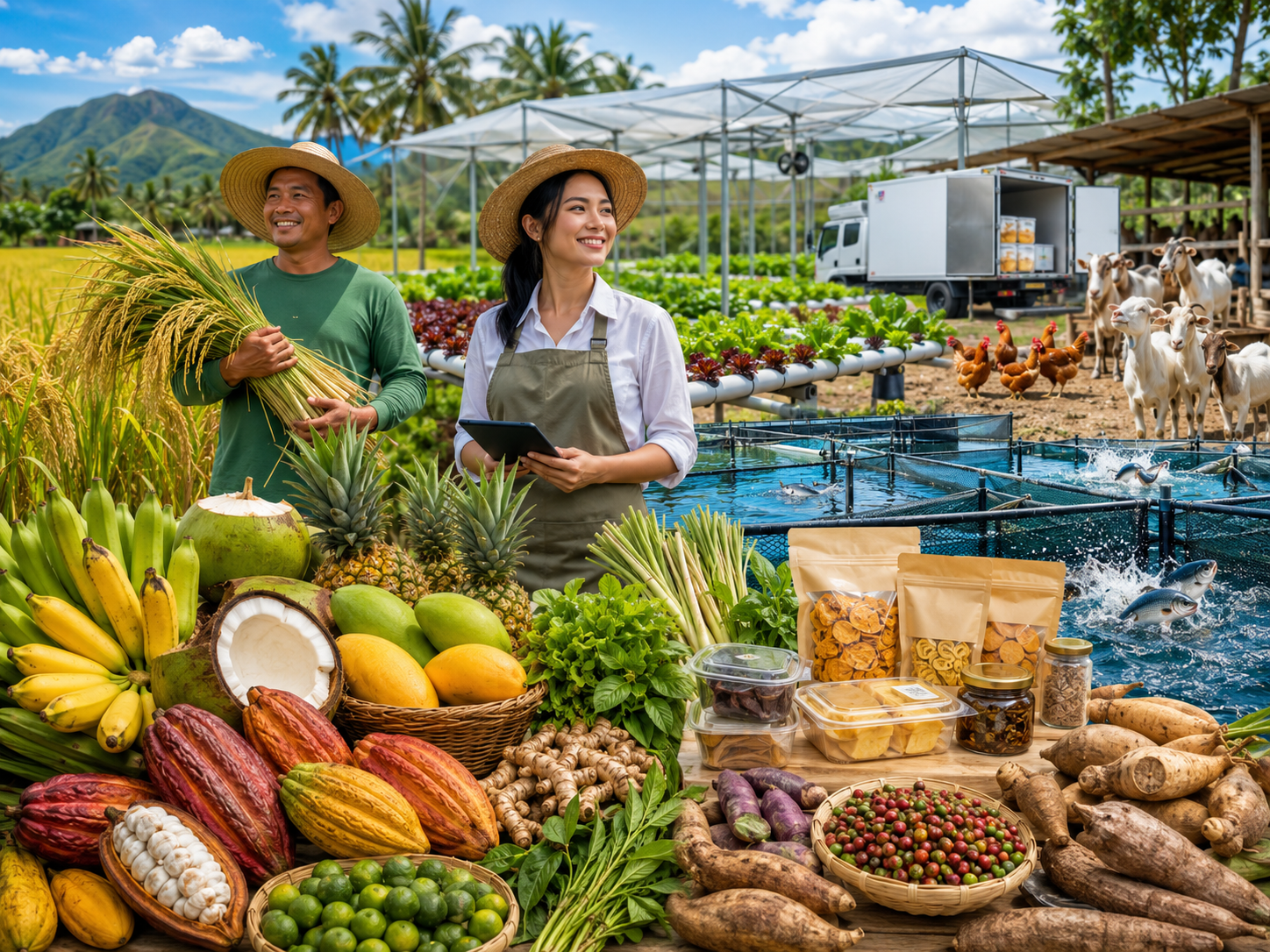
The agribusiness sector in the Philippines presents many profitable opportunities because food remains a basic and constant need. Filipino entrepreneurs can benefit from this demand by entering businesses related to farming, livestock, fisheries, processing, logistics, and agricultural technology. The sector is especially attractive because it supports both domestic consumption and export possibilities. With the right strategy, agribusiness can become a stable and scalable venture.
One promising path is high-value farming. Instead of focusing only on common crops with heavy competition, entrepreneurs can grow products that command better prices. These include herbs, salad vegetables, mushrooms, cacao, coffee, dragon fruit, pineapple, banana, mango, coconut, and spices. Restaurants, cafés, hotels, supermarkets, and health-conscious consumers often look for consistent supplies of fresh and quality produce. Entrepreneurs can increase their advantage by using greenhouse farming, drip irrigation, organic methods, or hydroponics.
Coconut-based businesses are especially relevant in the Philippines because coconut is widely grown in many provinces. Beyond selling raw coconuts, entrepreneurs can create value-added products such as virgin coconut oil, coconut sugar, coconut milk, coconut flour, coconut chips, and beauty products. These items can be sold to local consumers and international markets. Good branding is important because coconut products often appeal to buyers interested in wellness, natural ingredients, and plant-based alternatives.
Coffee and cacao also offer exciting possibilities. Local coffee culture has grown, and many consumers now appreciate beans from different Philippine regions. Entrepreneurs can invest in coffee farming, roasting, packaging, café supply, or specialty coffee branding. Cacao has similar potential because it can be processed into tablea, chocolate bars, cocoa powder, and baking products. These businesses require careful post-harvest handling, fermentation, drying, roasting, and quality control.
Food processing is one of the best ways to improve profitability in agribusiness. Raw agricultural products can spoil quickly and may sell at low prices during peak harvest. Processing turns them into products with longer shelf life and higher market value. Examples include dried mangoes, banana chips, fruit jams, bottled sauces, pickled vegetables, smoked fish, frozen seafood, ready-to-cook meals, and natural beverages. Entrepreneurs can also target pasalubong stores, online buyers, groceries, and corporate gift markets.
Livestock and poultry ventures continue to be important because Filipino households regularly consume meat and eggs. Broiler chicken production, layer farming, native chicken raising, goat farming, and small-scale dairy production can become profitable with proper management. However, entrepreneurs must prepare for feed expenses, disease control, sanitation, and market price changes. Partnering with veterinarians, feed suppliers, and stable buyers can reduce operational risks.
Aquaculture provides another strong business direction. Fish and seafood are essential parts of the Filipino diet, and the country’s geography supports many aquatic ventures. Tilapia, bangus, shrimp, crab, and seaweed farming can serve local and export markets. Entrepreneurs can increase profits by combining production with cold storage, seafood delivery, fish processing, or restaurant supply contracts.
Agribusiness support services are also worth exploring. Many farmers need access to quality seeds, fertilizers, feeds, tools, irrigation systems, packaging materials, and machinery. Entrepreneurs can operate input supply stores, equipment rental businesses, mobile milling services, compost production, or farm advisory services. These businesses can be less risky than direct farming because they serve many producers instead of depending on one harvest.
Digital innovation is changing agriculture as well. Farm-to-consumer platforms, online produce marketplaces, crop monitoring tools, and digital payment systems can help modernize the sector. Entrepreneurs who understand both agriculture and technology can solve problems in pricing, distribution, transparency, and access to buyers.
For Filipino entrepreneurs, the strongest agribusiness opportunities are found where production meets value creation. A farm can become more profitable when paired with processing, branding, logistics, and technology. By focusing on quality, efficiency, and market needs, entrepreneurs can build agribusinesses that are both financially rewarding and beneficial to local communities.