
The Regulatory Architecture Behind the Boom
The Philippines’ renewable energy sector is not just market-driven—it is policy-driven. The Renewable Portfolio Standards (RPS), the Green Energy Option Program (GEOP), and the Net-Metering rules form a triad of regulations that compel distribution utilities and large consumers to source power from renewable sources. Under the RPS, distribution utilities must increase their renewable energy share annually, creating guaranteed demand. The GEOP, meanwhile, allows large electricity consumers to choose 100% renewable supply.
How Companies Innovate Under Regulatory Pressure
Energy companies have responded with innovation. ACEN, for instance, has developed a portfolio of “shovel-ready” projects to meet RPS demand quickly. AboitizPower has invested in smart grid technologies to manage the intermittency of solar and wind. First Gen has expanded its geothermal and hydro assets. The regulatory push has also spawned a new class of service providers: renewable energy certificate (REC) traders, energy management consultancies, and cleantech startups.
The Green Energy Option Program in Action
GEOP is particularly transformative for commercial and industrial customers. A mall chain, for example, can now contract directly with a renewable generator, bypassing the distribution utility. This has created a competitive market for green power, forcing utilities to offer greener products. According to the Philippine Department of Energy, participation in GEOP has grown steadily since its full implementation.
Challenges: Grid Stability and Regulatory Lag
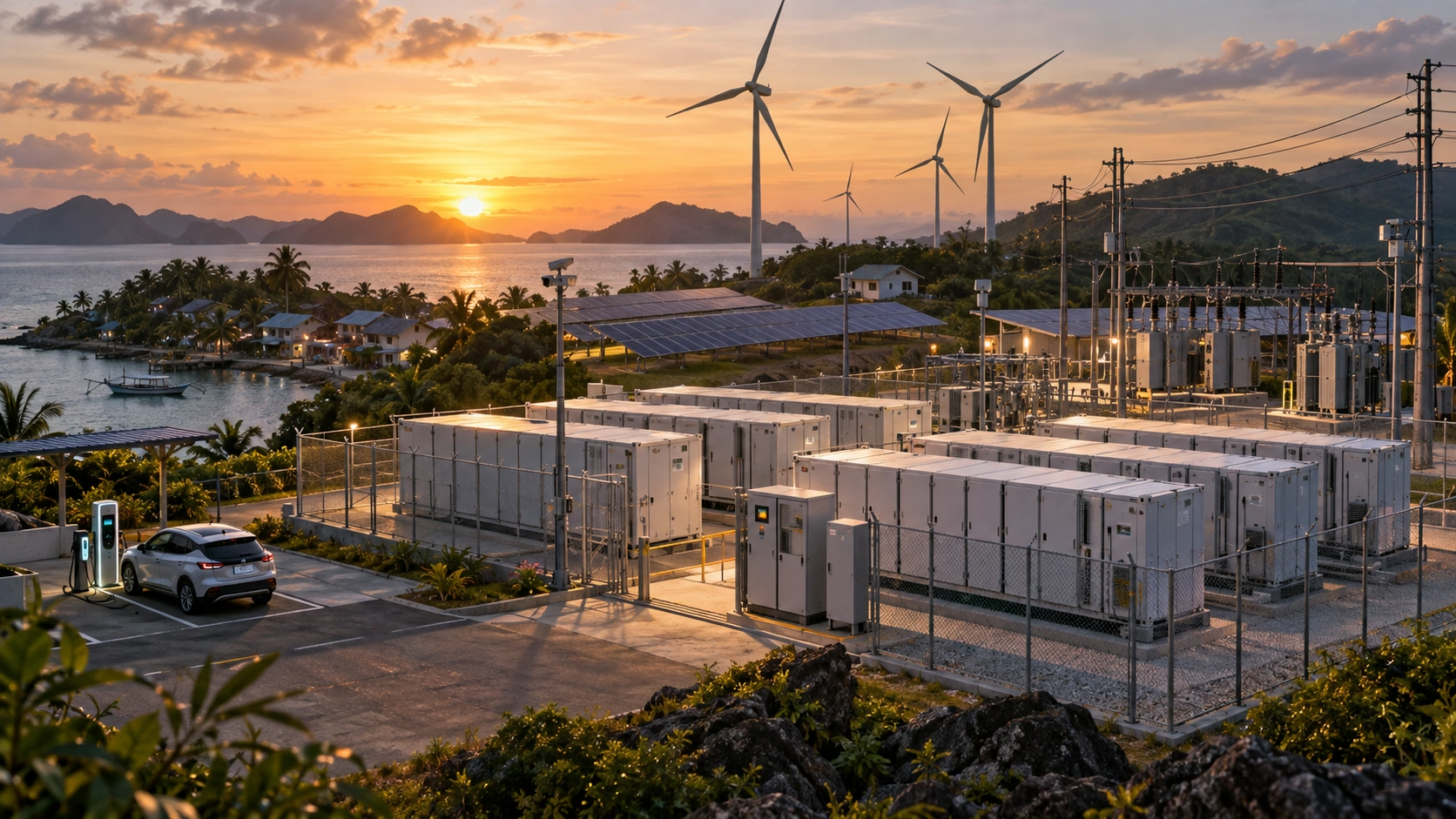
Despite progress, challenges remain. The intermittent nature of solar and wind requires grid upgrades and storage. Regulatory lag—the time it takes for new rules to be implemented—can slow investment. Industry stakeholders have called for faster permitting and clearer transmission planning.
Innovation in Financing and Risk Mitigation
Financial innovation is also part of the story. Green bonds, sustainability-linked loans, and blended finance structures are being used to fund renewable projects. The Asian Development Bank (ADB) and the International Finance Corporation (IFC) have been active partners. These instruments lower the cost of capital and attract institutional investors.
What to Watch in 2026
The year 2026 will test whether the Philippines’ policy framework can deliver on its promises. Key indicators include the success of GEA-4, the rollout of offshore wind auctions, and the expansion of GEOP participation. If these milestones are met, the Philippines could emerge as a model for policy-driven renewable innovation in emerging markets.