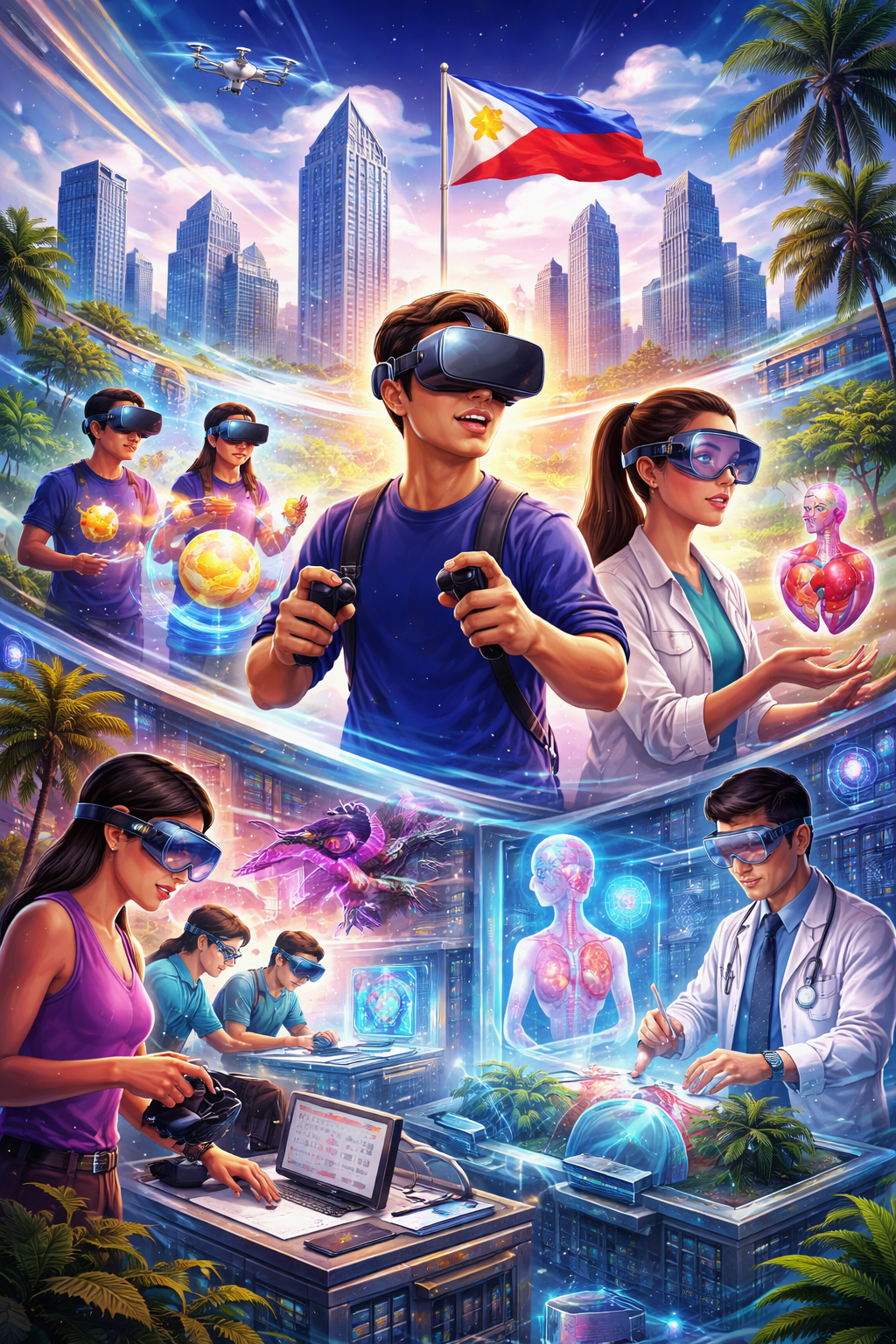
As the Philippines’ technology sector continues to evolve, virtual reality (VR) and augmented reality (AR) have emerged as key drivers of innovation for local startups. These technologies are being harnessed in diverse fields such as entertainment, education, healthcare, and even retail, leading to new possibilities and challenges for both businesses and consumers.
Initially, VR and AR were mainly used for entertainment purposes, with VR being popularized in the gaming industry. However, as the technology matured, startups in the Philippines began to explore other areas where VR and AR could have a profound impact. In gaming, VR continues to be used to create highly immersive experiences that offer more depth than traditional gaming formats.
The education sector is also witnessing a digital revolution with VR and AR. Philippine startups are developing educational platforms that allow students to engage in interactive learning experiences. For example, VR technology is being used to simulate real-world environments, giving students the chance to experience historical events, geographical locations, and even scientific experiments firsthand.
Healthcare startups are utilizing AR to improve diagnostic accuracy and create virtual consultations. Doctors can now use AR-based tools to analyze 3D models of patients’ bodies and conduct virtual surgeries. This technology is not only enhancing patient care but also expanding access to medical expertise, particularly in rural or underserved areas.
The Philippine government’s active role in supporting the tech startup ecosystem has also been pivotal in accelerating the development of VR and AR solutions. By providing funding, tax breaks, and access to global markets, the government is helping local startups scale their businesses and compete internationally.
The integration of VR and AR into Filipino startups is accelerating the country’s position as a tech hub in Southeast Asia, and the future looks bright for these technologies to continue shaping the way businesses operate.