
The Business Process Outsourcing (BPO) industry has long been an economic hero for the Philippines, contributing billions of dollars and creating millions of jobs. However, entering 2026, the industry is at a crossroads. The rapid advancement of artificial intelligence (AI) capable of handling repetitive tasks threatens the traditional business model that relies on call volume. Instead of sinking, major players in the sector are making strategic leaps to level up, turning the AI threat into an opportunity for efficiency and added value.
Shifting from Call Center to Knowledge Process Outsourcing
Call center factories in Metro Manila and Iloilo are now transforming into centers for data analytics and high-value customer service. Simple tasks like resetting passwords or providing account balance information have been fully automated by AI chatbots. As a result, the Filipino human workforce is redirected to handle complex escalations that require empathy, critical problem-solving, and a deep understanding of Western customer culture. BPO companies now prefer to call themselves providers of Digital Transformation Services, offering business process consulting, cybersecurity, and big data analytics.
Hybrid Work Models and Digital Infrastructure
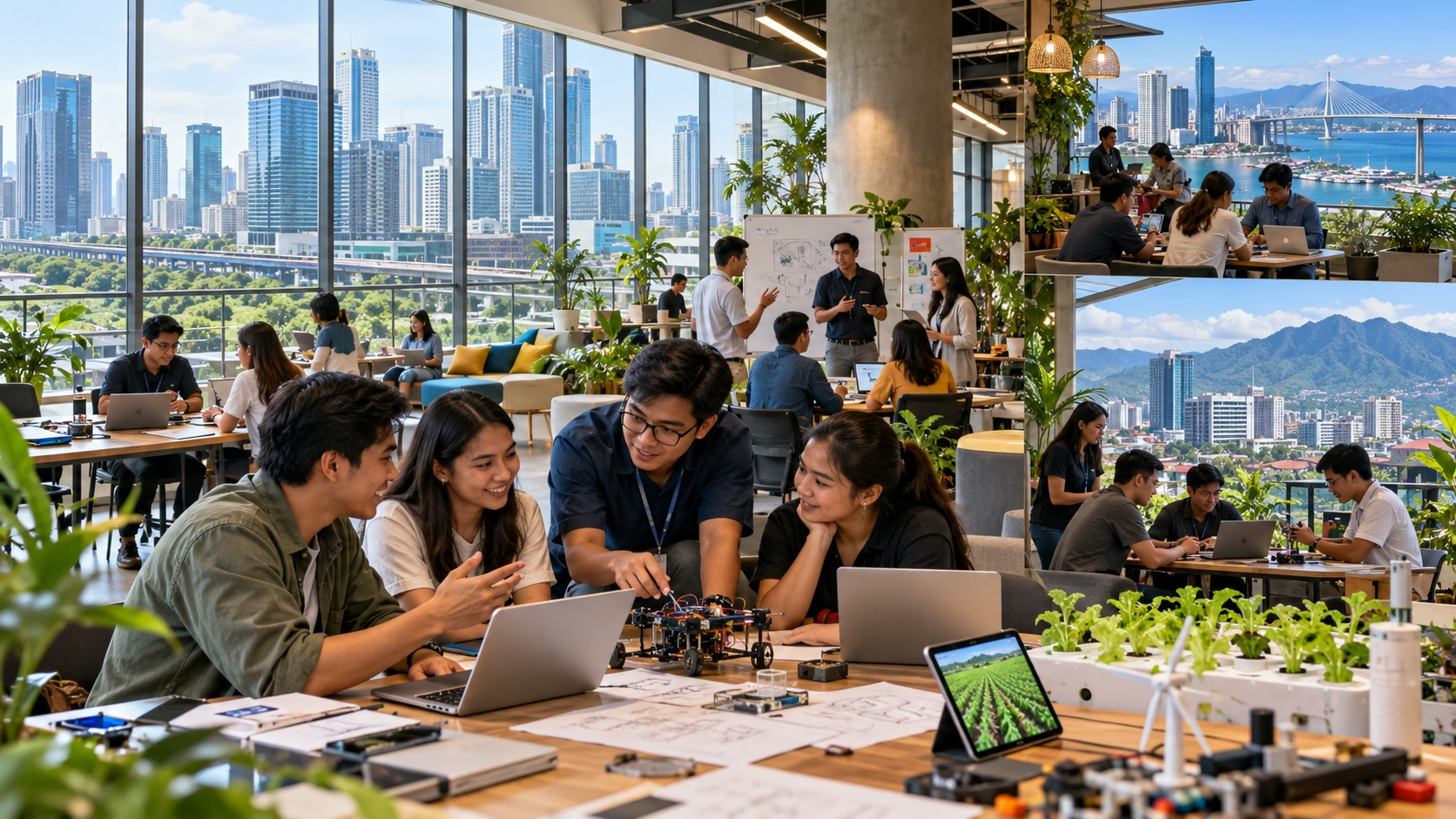
Post-pandemic, the hybrid work model has become a permanent standard in the 2026 BPO industry. This demands significant improvements in information technology infrastructure outside major urban areas. The Philippine government, through the Broadband ng Masa initiative, has expanded high-speed internet access to tier-two cities like Bacolod, Legazpi, and General Santos. This allows BPO companies to recruit talent from across the archipelago without forcing them to move to congested Manila. For workers, this means improved quality of life and reduced transportation costs. For companies, it opens access to a wider talent pool with cheaper office rental operational costs.
Data and Employment Prospects
Despite fears of mass layoffs due to automation, data tells a different story. According to a report from the IT and Business Process Association of the Philippines (IBPAP), the industry is actually targeting the addition of up to 1 million new jobs by 2028, focusing on high-tech roles such as data scientists, AI developers, and cybercrime analysts. However, there is one condition: massive upskilling and reskilling. By 2026, a bachelor’s degree alone is no longer enough; specific certifications in technology platforms like Salesforce, AWS, or ServiceNow are golden tickets to high salaries in this sector.
The success of the Philippine BPO industry in 2026 is proof that technology does not always replace humans but rather redefines their role in the global value chain. By investing in human intelligence and digital agility, the Philippines remains firmly established as the world’s outsourcing capital.