
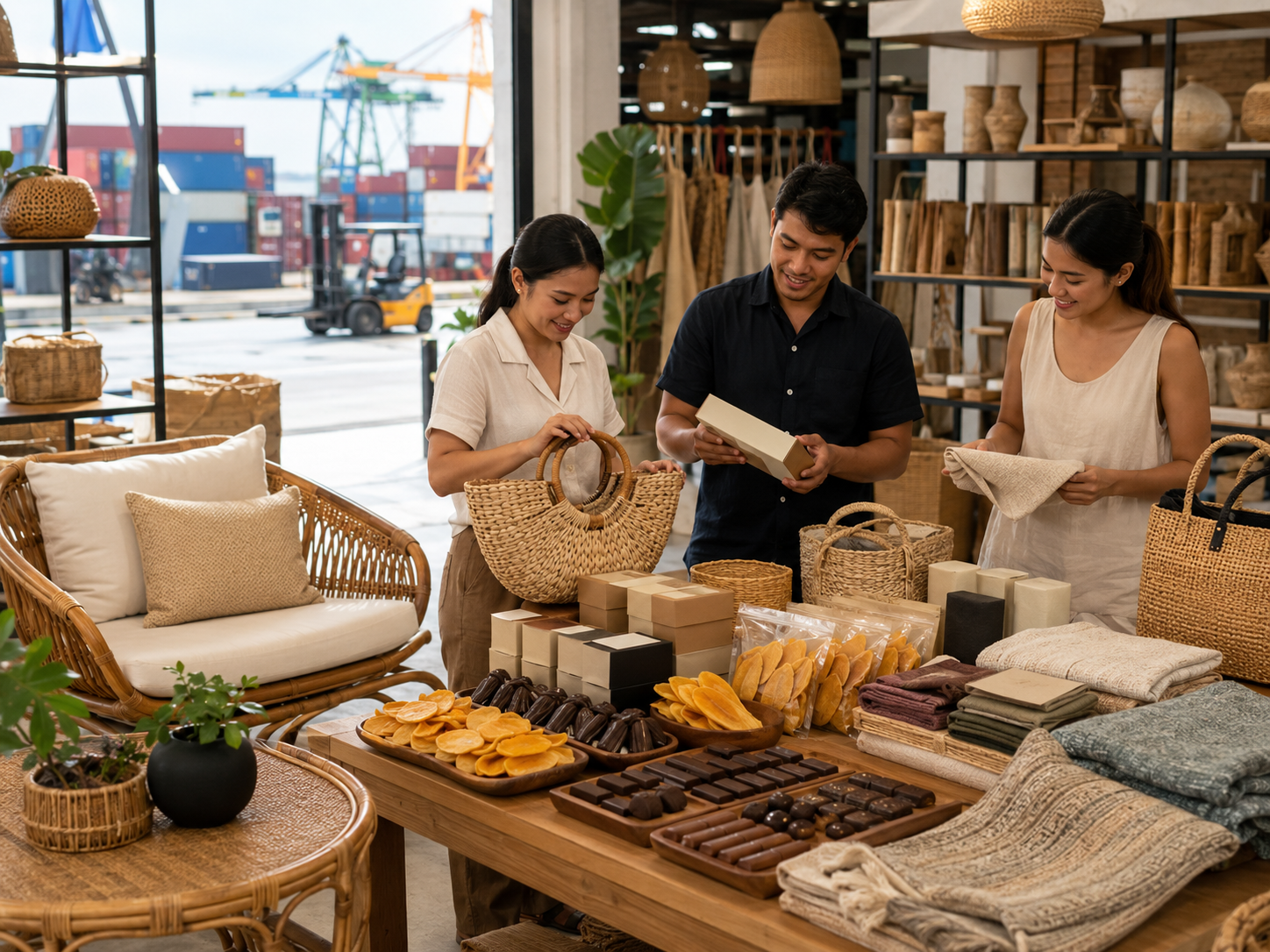
Filipino entrepreneurs have shown that local products do not need to stay local forever. From handcrafted furniture in Cebu to premium chocolate from Mindanao and social-enterprise fashion made with upcycled fabric, many Philippine-made products have found audiences beyond the country’s borders.
For readers searching for examples of Filipino entrepreneurs and how they support local product exports, the real lesson is not only about inspiration. It is about understanding what makes a product export-ready: consistent quality, strong branding, reliable supply, competitive pricing, clear documentation, and a story that global buyers can trust.
Why Philippine Local Products Can Win in Global Markets
The Philippines has a natural advantage in products that carry identity, craftsmanship, and regional character. Global consumers are increasingly interested in goods that feel authentic: handmade home décor, ethically produced fashion, specialty food, natural personal care, cacao-based products, coconut-based goods, and design-led furniture.
But authenticity alone is not enough. A local product becomes exportable when it can meet buyer expectations repeatedly. A buyer in Tokyo, Dubai, Sydney, or Los Angeles does not only ask, “Is this beautiful?” They also ask, “Can this business deliver the same quality next month? Are the ingredients or materials compliant? Is packaging suitable for shipping? Can the supplier communicate clearly?”
This is where successful Filipino entrepreneurs stand out. They do not simply sell “made in the Philippines” as a label. They refine the product until it feels relevant to an international lifestyle while keeping its Filipino roots visible.
One useful way to understand export success is to look at three layers:
First, the product must solve a clear market need. A handcrafted chair is not just furniture; it is a premium design object for hotels, resorts, and homes. A chocolate bar is not just a snack; it is a specialty food product with a cacao origin story. A woven bag is not just an accessory; it is a social-impact fashion item.
Second, the business must build trust. International buyers need professional catalogs, product specifications, consistent pricing, export documents, and reliable response times.
Third, the brand must communicate value beyond price. Filipino products often compete best when they highlight design, quality, craftsmanship, sustainability, and origin rather than trying to be the cheapest option.
Filipino Entrepreneurs and Brands That Helped Put Local Products on the Global Map
One of the clearest examples is Kenneth Cobonpue, the Cebu-based designer and entrepreneur known for furniture that combines Filipino craftsmanship with contemporary global design. His work shows how a local material or craft tradition can become premium when paired with strong design language, international presentation, and consistent production standards. His brand’s global visibility also reflects the importance of design fairs, hospitality buyers, and export-friendly product photography. Readers can explore his work through the official Kenneth Cobonpue website.
Another important example is Rags2Riches, co-founded by Reese Fernandez-Ruiz. The brand works with community artisans and transforms textile scraps and indigenous fabrics into fashion and lifestyle products. Its strength is not only the product itself, but also the story behind the product: livelihood, sustainability, and responsible consumption. For export-minded founders, this is a valuable lesson. Global buyers often respond to products that combine beauty with credible social impact, but the story must be supported by real operations, not just marketing. More information is available at Rags2Riches.
In food, brands such as Auro Chocolate demonstrate how Philippine cacao can be positioned as a premium product rather than a raw commodity. Founded by Filipino entrepreneurs Mark Ocampo and Kelly Go, Auro helped bring more attention to Philippine-grown cacao through tree-to-bar chocolate, farmer partnerships, and international-quality branding. The lesson here is powerful: when entrepreneurs process local raw materials into higher-value finished goods, they can improve export potential and create more value inside the country. See the brand at Auro Chocolate.
The chocolate category also includes Malagos Chocolate, associated with the Puentespina family in Davao. Its international recognition helped reinforce the idea that Philippine cacao can compete in specialty markets. For small producers, this matters because awards, certifications, and third-party recognition can make buyers more comfortable trying a product from a less familiar origin. More details can be found at Malagos Chocolate.
In personal care, Human Nature, created by the founders of Gandang Kalikasan, shows how local ingredients, ethical sourcing, and natural formulations can be turned into a consumer brand with wider market appeal. Its example is useful for entrepreneurs because personal care exports require more than attractive packaging. They often involve ingredient transparency, labeling requirements, product safety standards, and market-specific compliance. The official brand site is Human Nature.
These examples are different in category, size, and business model, but they share a pattern. Each one connects local identity with professional execution. They do not rely only on patriotism or novelty. They improve design, packaging, consistency, storytelling, and buyer confidence.
A Practical Export Playbook Inspired by Successful Filipino Entrepreneurs
The first step is to make the product internationally understandable. A buyer should be able to understand the product in less than a minute: what it is, who it is for, what makes it different, and why it is worth the price. This is why export-ready brands invest in clear catalogs, clean product names, accurate dimensions, material details, shelf-life information, and high-quality photos.
The second step is to define the right market. Not every product should be exported everywhere. A coconut-based personal care product may fit markets that value natural beauty. A handmade furniture line may be more suitable for hospitality buyers, boutique hotels, and interior designers. Premium chocolate may work better in specialty food shops than in price-sensitive mass retail.
The third step is to make the product buyer-ready. For food, this may include shelf-life testing, nutrition labels, ingredient declarations, packaging durability, and compliance with destination-market rules. For furniture and home décor, it may include product dimensions, material treatment, durability, shipping volume, and care instructions. For fashion and lifestyle goods, it may include color consistency, stitching quality, packaging, ethical sourcing details, and production capacity.
The fourth step is to build credibility through channels that buyers already trust. Trade shows, export missions, online B2B platforms, and curated design showcases can help. Philippine businesses may explore programs and events connected with CITEM and FAME+, which promote Philippine design, lifestyle, food, and creative products to wider markets.
The fifth step is to protect the brand’s promise. Many local products fail not because the first order is bad, but because the second or third order becomes inconsistent. Export success requires systems: supplier agreements, quality checks, inventory planning, costing discipline, and clear communication with buyers.
A simple export-readiness checklist can include:
- Product specifications are complete and accurate.
- Packaging can survive shipping and handling.
- Pricing includes production, packaging, logistics, duties, and margins.
- The business can produce repeat orders at consistent quality.
- Labels and claims follow the rules of the target market.
- Photos, catalogs, and buyer communication look professional.
- The entrepreneur knows the minimum order quantity they can realistically fulfill.
- The brand story is clear, truthful, and easy to verify.
The most successful Filipino entrepreneurs usually do not treat exporting as a lucky break. They treat it as a discipline.
Common Mistakes That Slow Down Local Product Exports
One common mistake is depending too much on the “local” story without improving the product. Global buyers may appreciate culture, but they still compare quality, price, packaging, delivery time, and after-sales support. A product must stand on its own even when the buyer has no emotional connection to the Philippines.
Another mistake is underpricing. Many small exporters forget to include packaging upgrades, rejected items, freight changes, payment delays, distributor margins, or compliance costs. A product that looks profitable locally may become unprofitable once exported. Entrepreneurs should calculate export pricing carefully before accepting large orders.
A third mistake is weak documentation. Export buyers often need product specifications, certificates, invoices, packing lists, and shipping details. Missing or unclear documents can delay shipments and damage trust.
A fourth mistake is making claims that cannot be supported. This is especially risky for food, health, beauty, and wellness products. Words such as “organic,” “natural,” “chemical-free,” “clinically proven,” or “sustainable” may require evidence depending on the market. Entrepreneurs should verify labeling and advertising rules before using strong claims.
A fifth mistake is growing faster than the supply chain can handle. A viral product can attract attention, but export buyers need reliability. It is better to accept smaller orders that can be fulfilled well than to take a large order and fail to deliver.
Practical Tips for Aspiring Exporters and Local Product Founders
Start with one product line, not everything in your catalog. Export buyers prefer clarity. A focused collection makes it easier to control quality, pricing, and inventory.
Study competitors in the target country. Look at their packaging, price range, materials, reviews, and retail positioning. This helps you understand whether your product is premium, mid-range, giftable, artisanal, or functional.
Invest in product photography. For many international buyers, your photo is the first sample. Poor lighting, unclear scale, or cluttered backgrounds can make a good product look unreliable.
Prepare a one-page buyer sheet. Include product name, description, materials or ingredients, dimensions or weight, minimum order quantity, lead time, wholesale price, packaging details, and contact information.
Use your Filipino identity with precision. Instead of saying “proudly Filipino” only as a slogan, explain what is Filipino about the product: the material, the craft community, the region, the ingredient, the design influence, or the production method.
Seek support from export-focused organizations. In addition to DTI and CITEM, businesses can explore resources from Philippine Exporters Confederation and relevant industry groups. These organizations can help entrepreneurs understand market requirements, trade events, and export procedures.
The bigger lesson from successful Filipino entrepreneurs is simple: local products travel farther when the business behind them becomes globally reliable. Craft opens the door, but systems keep the door open.
Key Takeaway
Filipino entrepreneurs who grow local product exports usually succeed by combining cultural identity with professional execution. They improve product quality, tell a credible story, understand buyer needs, and build operations that can deliver consistently.
For aspiring exporters, the path does not begin with chasing every international market. It begins with making one strong product export-ready, choosing the right market, and building enough trust for buyers to order again.
6. FAQ
1. What products from the Philippines have strong export potential?
Products with strong export potential include specialty food, cacao and chocolate, coconut-based goods, natural personal care, furniture, home décor, fashion accessories, and artisan-made lifestyle products.
2. Why are Filipino entrepreneurs important to export growth?
Filipino entrepreneurs help turn local materials, skills, and cultural stories into higher-value products that can compete in global markets.
3. How can a small business in the Philippines start exporting?
A small business can start by choosing one export-ready product, researching target markets, improving packaging, preparing documents, calculating export pricing, and contacting DTI or export-support organizations.
4. What makes a local product export-ready?
An export-ready product has consistent quality, compliant packaging and labeling, clear specifications, reliable supply, professional branding, and pricing that includes logistics and export costs.
5. Where can entrepreneurs check Philippine export data?
They can check the Philippine Statistics Authority, DTI Export Marketing Bureau, ITC Trade Map, UN Comtrade, and industry groups such as PHILEXPORT.