Fashion in the Philippines has been shaped by centuries of cultural exchange, and Western influence is one of the most important forces in that process. Western clothing affected Filipino dress through colonization, education, media, business, and globalization. It introduced new garments and new standards, but it also encouraged Filipinos to reinterpret their own traditional clothing in modern ways.
Before colonial influence, many Filipino communities wore garments that were simple, practical, and connected to local materials. Clothing was designed for a tropical climate and often made from woven fibers. Decoration could show status, artistry, and ethnic belonging. These early forms of dress were not uniform because the Philippines has many regions and cultural groups, each with its own textile traditions and clothing practices.
Spanish colonization changed the appearance of Filipino clothing by introducing European modesty and formal dress. Women’s clothing became more layered, with long skirts, blouses, and shoulder coverings. Men adopted shirts and trousers influenced by European style. From this period came garments that later became national symbols, such as the baro’t saya and the barong Tagalog. These clothes were not purely Western or purely local; they were products of cultural blending.
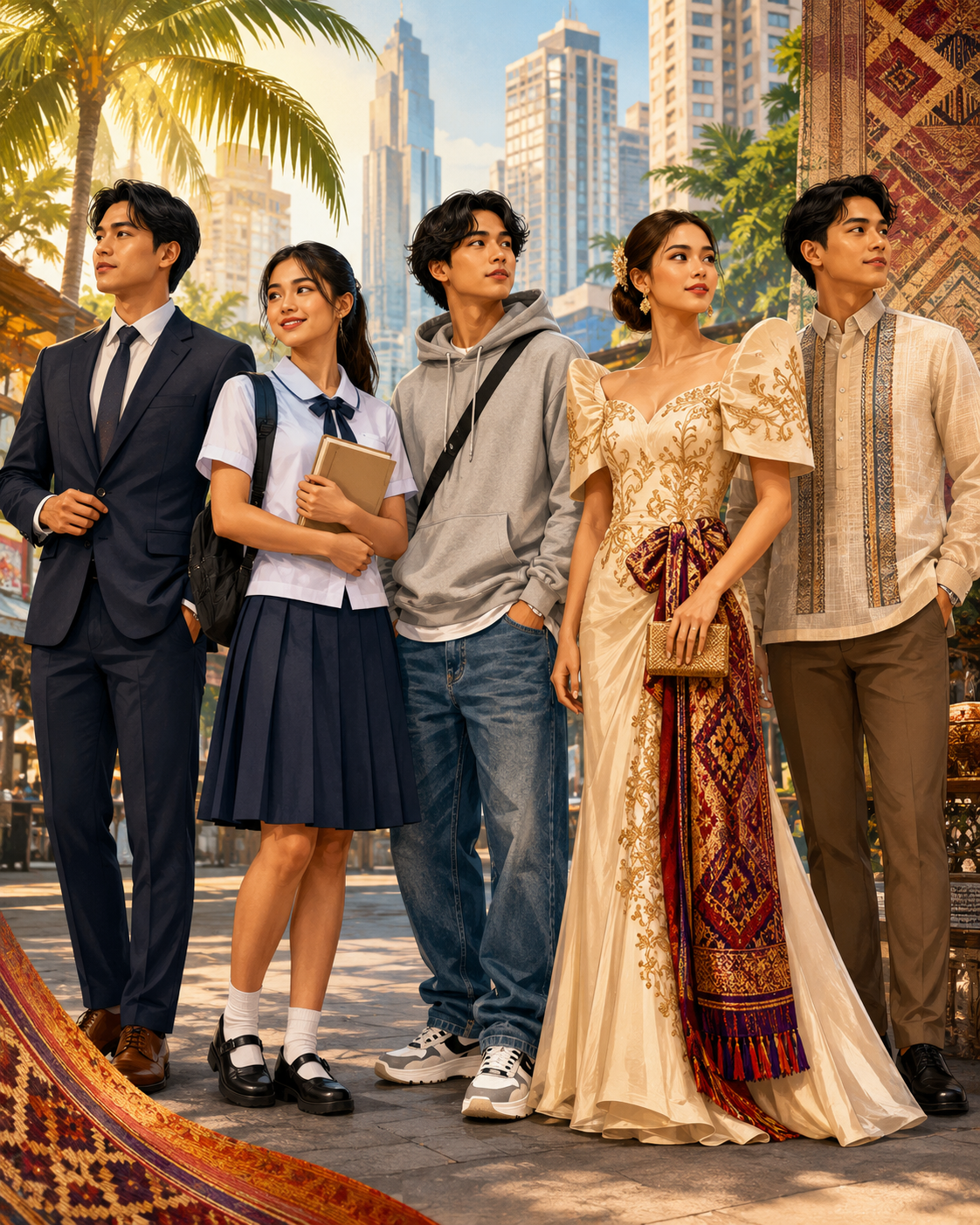
The American period brought a different kind of Western influence. American fashion was more connected to modern institutions such as schools, offices, and democratic government. Western-style uniforms became common in education. Business clothing, including suits, ties, skirts, and blouses, became part of professional life. This made Western dress practical as well as symbolic. A person wearing Western clothing was often seen as educated, modern, and prepared for participation in public life.
The rise of popular culture made Western fashion even more desirable. American films, music, magazines, and later television exposed Filipinos to changing trends. Filipino audiences saw actors and musicians wearing fashionable clothes and began to associate these styles with confidence, beauty, and success. The influence of celebrities encouraged people to experiment with hairstyles, makeup, dresses, and casual outfits.
Western fashion also affected ideas of gender. Women’s clothing became more varied as Western styles introduced shorter skirts, tailored dresses, trousers, and office wear. These changes reflected broader social shifts, including women’s education and employment. Men’s fashion became increasingly structured around shirts, trousers, jackets, and leather shoes. Even when formal Western suits were uncomfortable in the heat, they remained symbols of authority and professionalism.
In everyday life, Western casual clothing became dominant. Jeans, T-shirts, sneakers, shorts, and sportswear are now common in the Philippines. These garments are convenient, affordable, and easy to style. They also match the influence of youth culture and global brands. Shopping malls, online stores, and fast-fashion retailers have made Western-inspired clothing widely available.
Still, Filipino fashion has preserved important traditional elements. The barong Tagalog remains a respected formal garment because it combines elegance, comfort, and national identity. The terno is frequently redesigned for modern events, using contemporary fabrics and sharper silhouettes. Designers also use local textiles such as piña, abaca, and indigenous weaves in modern fashion pieces.
Western fashion has shaped Filipino dress in deep and lasting ways. It changed clothing habits, professional appearance, beauty ideals, and consumer behavior. Yet Filipino fashion continues to show resilience by blending Western trends with local heritage, creating a style that is modern, adaptive, and culturally meaningful.