
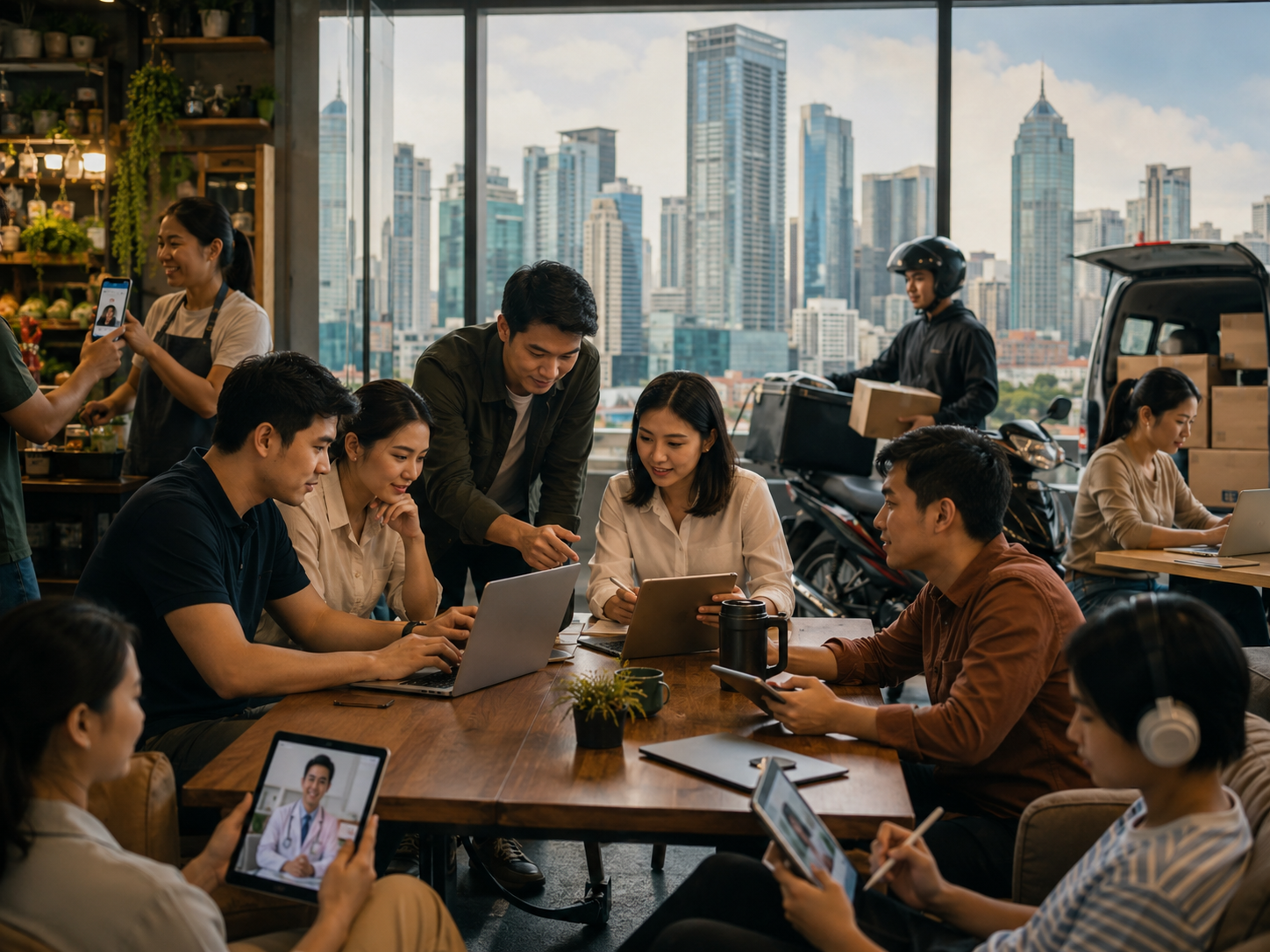
A Market Entering a More Serious Phase
The Philippine technology startup market is moving from early enthusiasm into a more serious phase of development. Founders are becoming more experienced, consumers are more digitally active, and investors are demanding clearer revenue models. This shift is healthy. It means the ecosystem is gradually moving away from growth-at-any-cost strategies and toward sustainable business building.
For global investors, the Philippines offers a different opportunity from more mature regional hubs. It is not only a market for quick user acquisition. It is a country where technology can solve long-standing problems in payments, commerce, logistics, education, healthcare, and business operations.
The World Bank’s country overview offers a useful starting point for economic context: https://www.worldbank.org/en/country/philippines/overview. Investors can use this type of source to connect startup potential with broader economic conditions.
Why the Philippines Deserves More Attention
The Philippines has several characteristics that support long-term technology adoption. It has a young population, strong social media engagement, widespread smartphone use, and a large base of overseas workers connected to domestic households through remittances. These conditions create demand for digital financial services, communication tools, commerce platforms, and family-focused products.
At the same time, the country still has inefficiencies that technology can improve. Many small businesses need affordable software. Consumers want faster and safer payments. Logistics networks need better coordination. Healthcare and education access remain uneven.
These challenges are not small inconveniences. They are large market openings.
Fintech, SaaS, and Logistics Are Core Investment Themes
Fintech remains the leading category because it addresses financial inclusion and daily transaction needs. Payment platforms, lending tools, remittance services, and insurance technology all have room to grow if they can meet regulatory and trust standards.
SaaS is another strong area. Philippine businesses increasingly need tools for bookkeeping, employee management, online selling, customer engagement, and inventory control. The winners will likely be companies that offer simple, mobile-friendly products at prices suitable for local merchants.
Logistics and digital commerce also deserve attention. The country’s island geography creates delivery and supply chain complexity. Startups that improve visibility, routing, warehousing, and last-mile efficiency can become valuable infrastructure for online trade.
The Real-World Shift: Investors Now Prefer Discipline
The global venture capital environment has changed. Investors are less willing to fund companies that burn cash without a clear path to profitability. This affects Philippine startups, but it may also strengthen the ecosystem. Founders are being pushed to prove real customer demand, control costs, and build revenue earlier.
This is good news for long-term investors. A market that rewards discipline can produce stronger companies over time.
Key Risks to Consider
Global investors should not ignore local risks. Regulation can affect fintech, lending, data usage, and platform businesses. Infrastructure limitations may slow expansion outside major cities. Currency movements and funding cycles can influence valuations. Exit opportunities may take longer than in deeper capital markets.
Due diligence should include local legal advice, customer interviews, competitive mapping, and careful analysis of unit economics.
The Strategic Opportunity
The Philippines may not be the easiest startup market in Southeast Asia, but it is one of the most interesting for investors with patience and local understanding. The strongest startups will be those that solve practical problems, reach beyond elite urban consumers, and build products people use repeatedly.
For global investors, the message is clear: the Philippine technology ecosystem is no longer a market to overlook. It is a long-term opportunity that deserves serious evaluation.