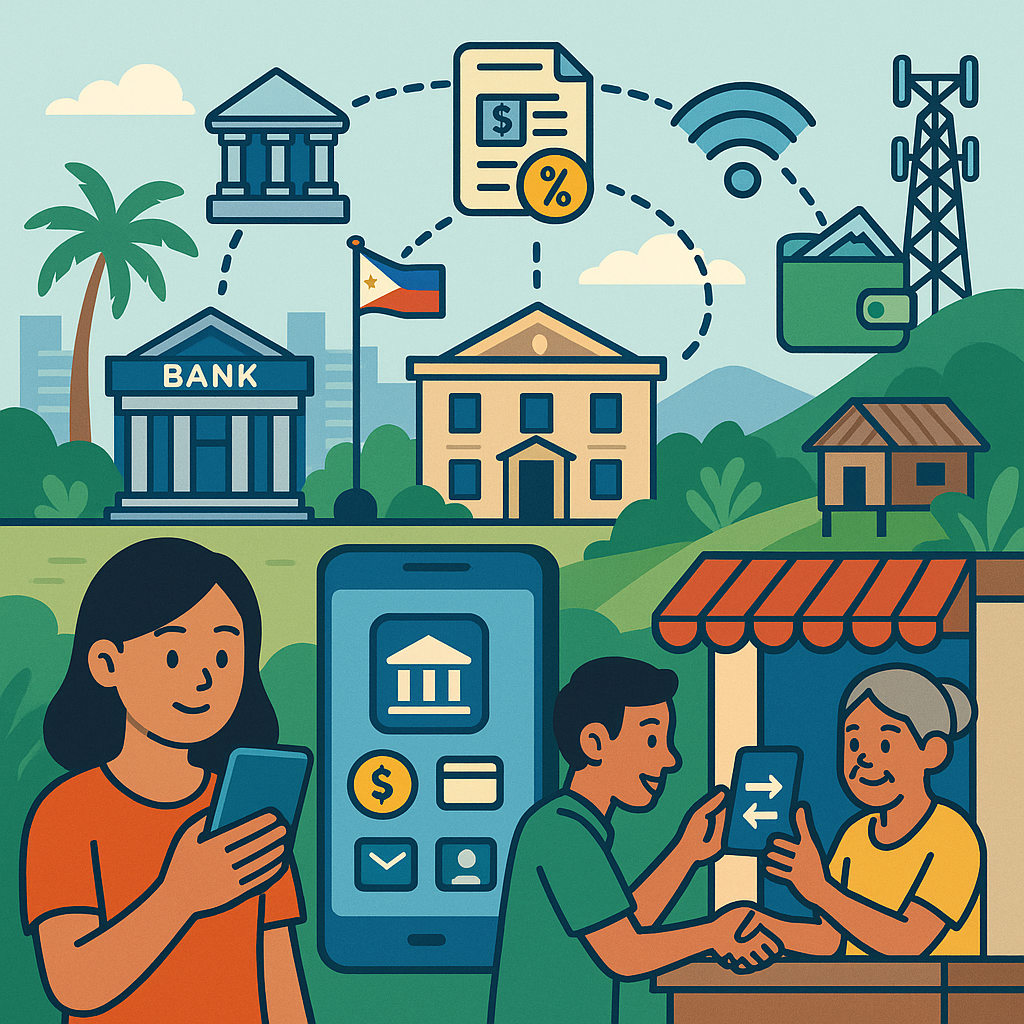
The rapid expansion of mobile banking in the Philippines has turned mobile phones into powerful financial tools. For a country composed of more than seven thousand islands, relying solely on traditional branches has never been practical. Mobile banking offers a bridge between cash-based livelihoods and the growing digital economy, providing an essential pathway to financial inclusion.
Many Filipinos work in the informal sector, run microbusinesses, or depend on seasonal income. These groups often lack the documentation, stable income, or collateral required by conventional banks. Mobile banking services, including digital wallets and app-based accounts, typically offer simplified onboarding processes. Basic accounts can often be opened using minimal identification and completed electronically, reducing the need for costly travel and face-to-face meetings.
Once onboarded, users gain access to a suite of services. They can store money securely, send funds to relatives, receive wages, pay utility bills, and shop online without handling physical cash. This is particularly important in areas where carrying cash may be risky or where merchants are far apart. In addition, mobile platforms often allow small-value transactions, making them suitable for users with irregular and modest incomes.
Mobile banking also plays an important role in integrating remittance flows into the formal financial system. Millions of Filipinos work overseas and send money home regularly. When remittances enter directly into mobile accounts or wallets, recipients are more likely to keep a portion in digital form, save, or use it to pay for services electronically. This reduces transaction costs and can encourage more systematic financial planning within households.
Another key dimension is the support mobile banking provides to micro and small enterprises. By accepting payments through QR codes or mobile transfers, entrepreneurs can serve customers who do not have cash on hand. Digital payment records offer a clearer picture of business income and expenses, which can later support applications for microloans or other financial products. Over time, this can help small businesses grow, hire more workers, and contribute more fully to the economy.
Nevertheless, the transformative potential of mobile banking depends on building trust and understanding. Users may be unfamiliar with digital interfaces or skeptical about storing money on a phone. Education campaigns, simple app design, and multilingual support are all important to address these concerns. Providing responsive customer service and clear procedures for dealing with lost phones, mistaken transfers, or suspected fraud also strengthens confidence.
Infrastructure challenges cannot be ignored. While mobile phone penetration is high, network quality and internet access vary across regions. Some rural and remote areas still experience weak signals or intermittent connectivity, which may discourage people from relying on mobile banking for critical transactions. Investment in telecommunications infrastructure, along with regulatory measures that encourage competition and affordable data, remains important.
On the policy side, authorities in the Philippines have aimed to create a regulatory environment that encourages innovation while safeguarding the financial system. Risk-based customer due diligence, tiered account structures, and interoperability frameworks can help digital financial services reach more people safely. When regulators, providers, and community organizations coordinate their efforts, mobile banking becomes more than a technological convenience: it becomes a bridge that connects cash-based communities to the opportunities of the digital economy, accelerating financial inclusion across the archipelago.