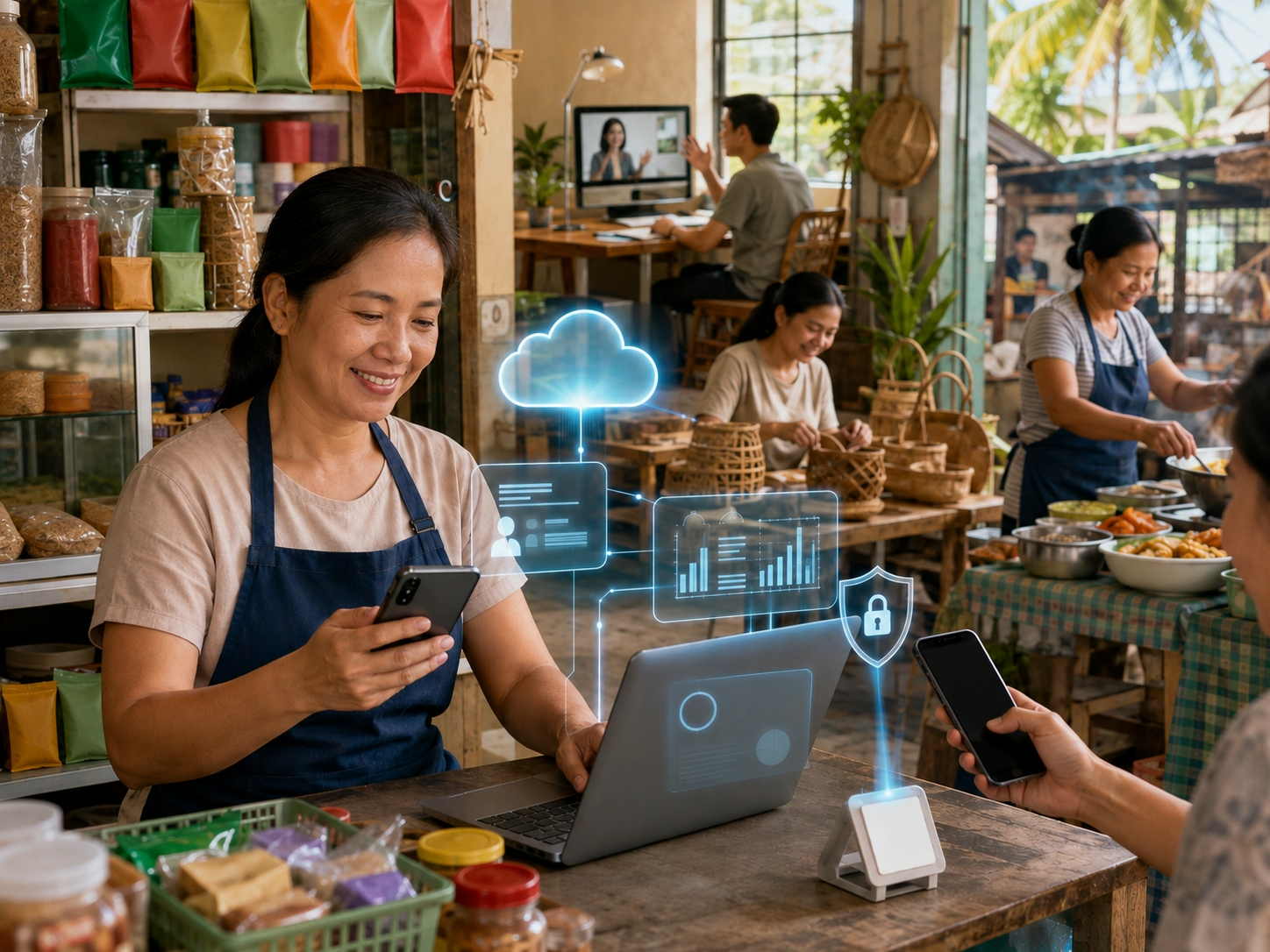

The Philippines is experiencing an exciting era of technological growth, with various sectors undergoing rapid transformations. From digital payments to artificial intelligence and e-commerce, the country is adapting to global technological trends that are revolutionizing its economy and society.
A major driver of the Philippine tech boom is the fintech sector. The country has seen the emergence of digital wallets like GCash, PayMaya, and Coins.ph, which have become indispensable in daily life. These platforms allow users to perform transactions, such as paying bills and transferring money, all through their smartphones. With financial inclusion being a critical goal, fintech has the potential to serve the millions of Filipinos who remain unbanked, bringing them into the digital economy.
E-commerce has similarly grown at an astounding rate. Platforms like Lazada and Shopee are taking full advantage of the increasing number of internet users in the country, offering consumers an array of products with the convenience of home delivery. With a young, tech-savvy population, the future of online shopping looks promising in the Philippines. As the logistics infrastructure continues to improve, delivery services are becoming faster and more reliable, further driving the growth of e-commerce.
The software development and IT outsourcing industry is also thriving in the Philippines. Known for its BPO sector, the country is expanding its capabilities in high-end tech services like software development, app creation, and system integration. The growth of this sector is supported by a skilled labor force and the increasing demand for digital solutions, especially in healthcare, education, and finance.
Emerging technologies like artificial intelligence and blockchain are also gaining traction in the Philippines. Companies are using AI for a range of applications, from improving customer support to analyzing big data for better decision-making. Blockchain technology is being explored for its potential to improve transparency and security, particularly in sectors like banking, real estate, and logistics.
The government’s role in promoting technology has been crucial to this growth. Through initiatives like the “National Innovation Agenda,” the government is encouraging innovation across various industries, making the Philippines an attractive destination for foreign investments in tech. These efforts have led to the creation of tech hubs in cities like Manila, Cebu, and Davao, where startups and established companies can collaborate and thrive.
In conclusion, the growth of the technology sector in the Philippines is an exciting development, with advancements in fintech, e-commerce, AI, and blockchain driving innovation. As the country continues to embrace digital transformation, it is well-positioned to become a leader in Southeast Asia’s tech scene.