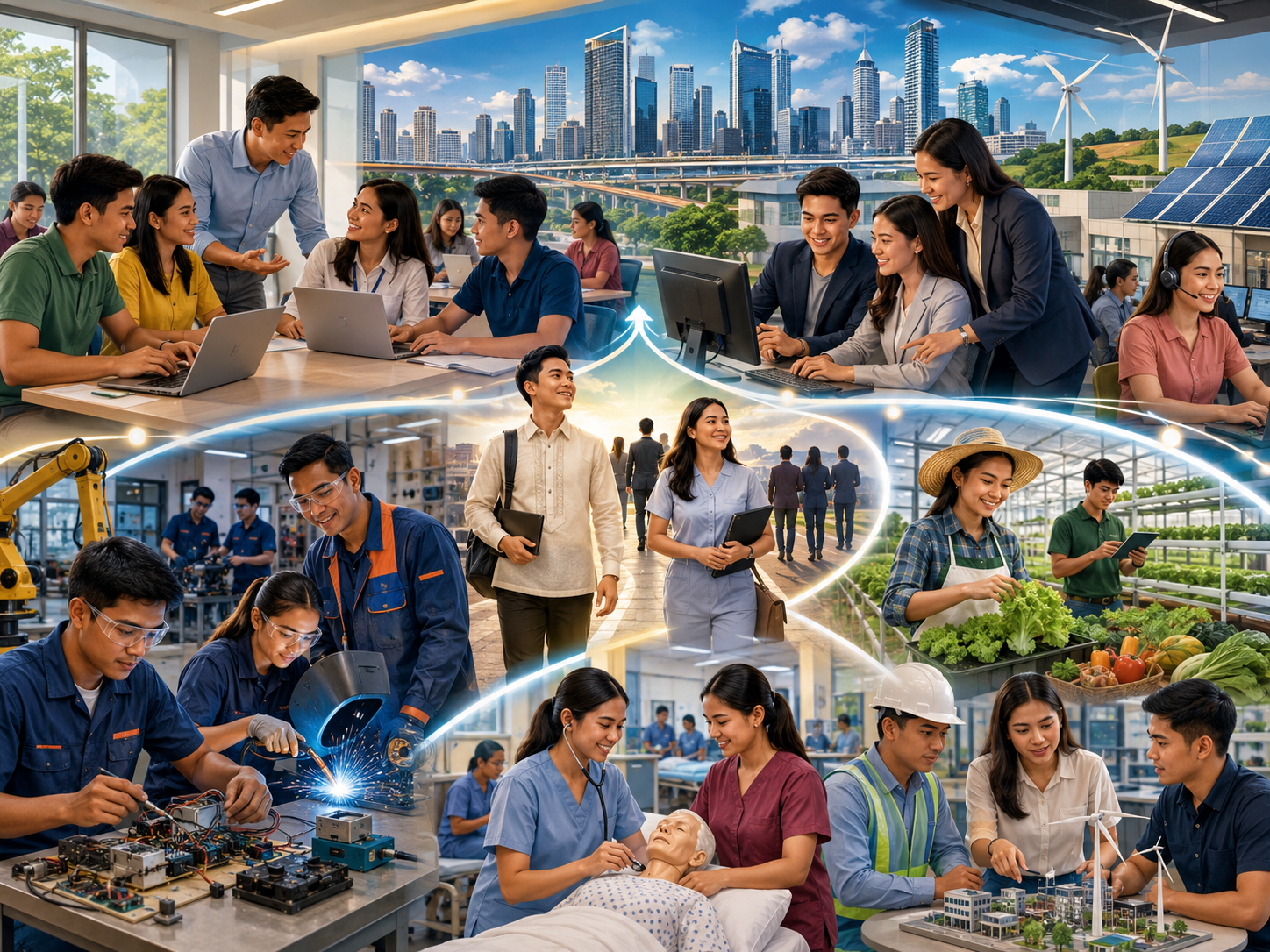
The Philippine family business story is not only one of failure. A parallel narrative is unfolding inside the country’s largest conglomerates, where a new generation of family leaders is taking operational control and using the transition to reshape portfolios, professionalize management, and extend the institution’s horizon beyond the founder’s lifetime.
At Ayala Corp., executive director and AC Mobility chief executive Jaime Alfonso Antonio Zobel de Ayala has described the next generation’s task as preserving the conglomerate’s culture of trust and entrepreneurship while modernizing its business portfolio and preparing the institution for its next 200 years. Speaking at the 2026 ASEAN Inclusive Growth Summit, he emphasized that the leadership transition was a collective effort involving younger family members and professional managers, not a solitary inheritance.
Modernization as Succession Strategy
The Ayala example is instructive because it treats succession as a portfolio decision as much as a personnel decision. Jaime Alfonso leads ACMobility, steering the group’s automotive arm from conventional vehicle distribution into electric mobility and charging infrastructure. His sister, Mariana Zobel de Ayala, serves as senior vice-president at Ayala Land and managing director at Ayala Corp., directing retail and mixed-use commercial developments.
The pattern repeats across other dynasties. Within the Aboitiz Group, fifth-generation leaders have taken command of primary operating units under a “Techglomerate” vision: Danel C. Aboitiz leads AboitizPower through a transition toward renewable energy and battery storage, while Ana Aboitiz Delgado serves as president and CEO of UnionBank, steering digital banking operations. At San Miguel Corp., John Paul L. Ang, eldest son of president and CEO Ramon Ang, has stepped into key operational roles across the group’s heavy industrial businesses.
Planned Transitions Beyond the Capital
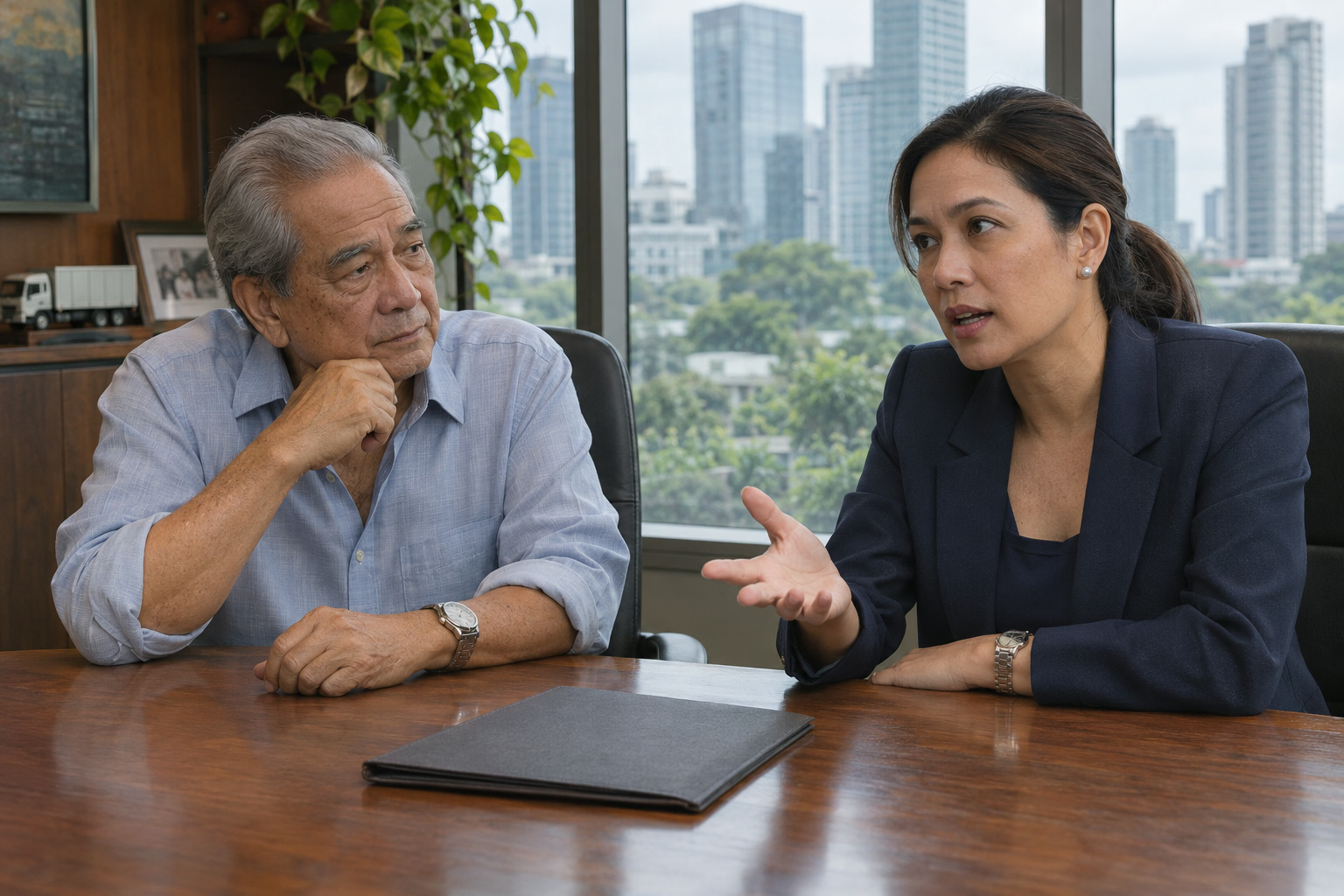
The next-generation shift is not confined to Metro Manila’s largest conglomerates. In June 2026, Cebu Landmasters, Inc. confirmed that founder Jose R. Soberano III had formally passed leadership to his son, Jose Franco B. Soberano, in a transition described as a long-prepared governance plan. The elder Soberano remains executive chairman overseeing strategic direction while the new CEO—who joined the company in 2010 and previously served as chief operating officer—leads an expansion beyond the Visayas and Mindanao base. Under his operational leadership, CLI grew from a modest portfolio to more than 130 projects across 21 cities and municipalities.
That case illustrates a critical distinction: the successor was not parachuted into the top role at the moment of the founder’s exit. He spent more than a decade inside the business, accumulated operating responsibility, and demonstrated a track record before the formal handover. Succession became a career path, not a birthright event.
What the New Generation Changes
The common thread across these transitions is a shift in the purpose of succession. The previous generation built the business; the next generation is repositioning it. That means moving away from traditional enterprise models toward digital, sustainable, and higher-growth sectors—electric mobility, renewable energy, digital banking, integrated urban developments.
This does not eliminate risk. A next-generation leader who modernizes too quickly can alienate the old guard; one who moves too slowly can inherit a business that is already obsolete. But the willingness to treat succession as a strategic inflection point—rather than a ceremonial transfer—is what separates the families that are building durable institutions from those that are merely distributing assets.