Environmental challenges in the Philippines are closely connected to daily life. Flooding can be worsened by clogged waterways, plastic waste can damage marine ecosystems, food waste can hurt both farmers and consumers, and unreliable energy can limit development in rural areas. Because of these connected problems, technology startups are building solutions that combine environmental responsibility with business innovation.
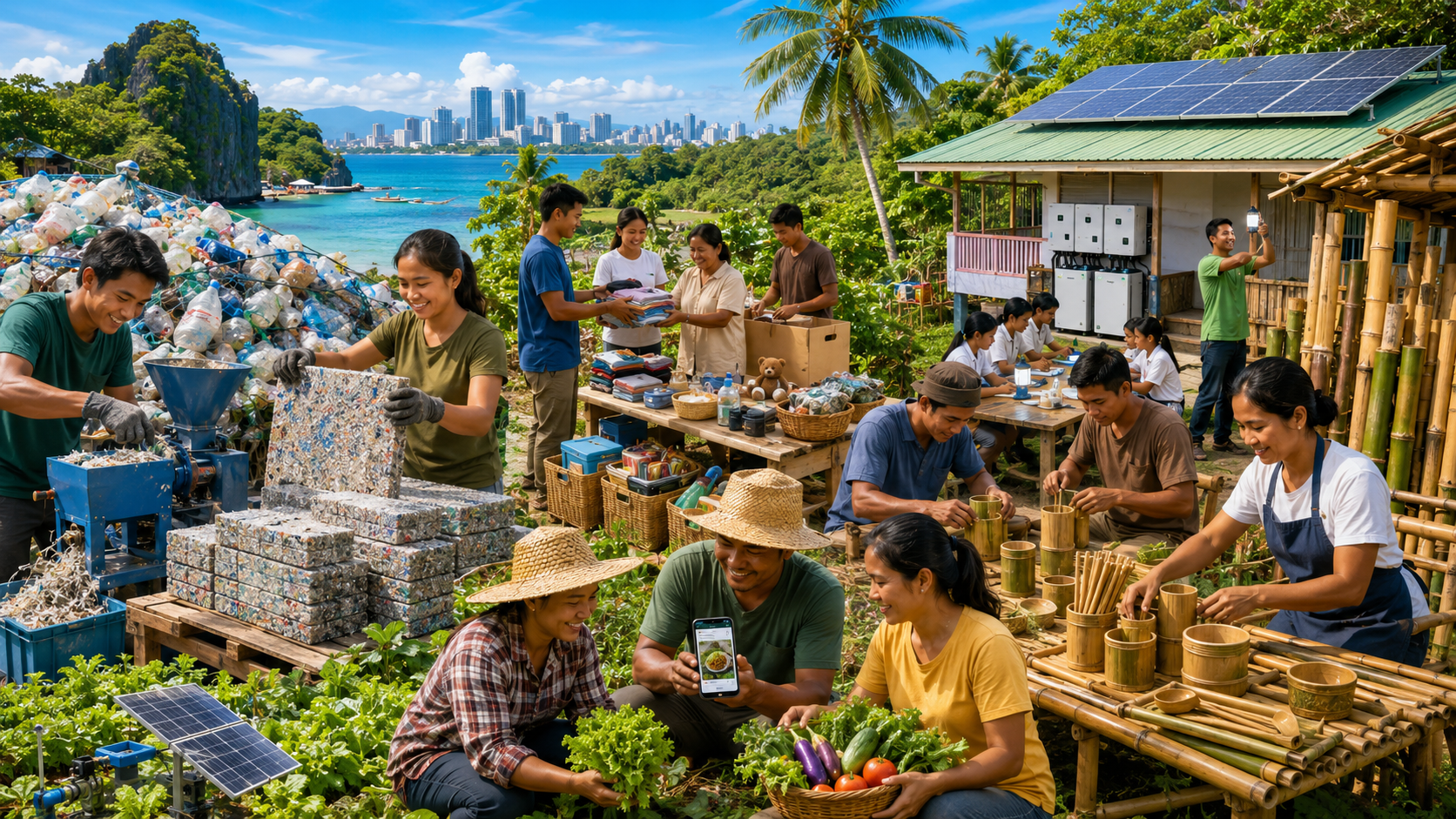
Waste management is one of the clearest examples. Green Antz Builders has gained attention for using plastic waste as a resource for construction materials. Instead of viewing plastic only as garbage, the company processes it into products such as eco-bricks and pavers. This model helps address two issues at the same time: the need to reduce plastic pollution and the demand for affordable building materials. It also encourages companies, schools, and communities to participate in collection and recycling activities.
Circular economy platforms are also helping reduce waste from the commercial sector. Humble Sustainability provides a model where usable products do not immediately become trash simply because they are excess inventory, returned goods, or unsold items. Through digital systems, businesses can identify which products can be resold, reused, donated, or redistributed. This is valuable because a large portion of waste is created by inefficient systems rather than by products that have completely lost their usefulness.
Sustainable consumer goods are another important part of the green startup movement. Bamboo-based companies such as Bambuhay promote alternatives to plastic products. Bamboo can be used to make practical items for everyday use, including straws, toothbrushes, utensils, and packaging solutions. Since bamboo grows quickly and can be sourced locally, it offers both environmental and social benefits. It can reduce dependence on plastic while supporting livelihood programs in rural areas.
Environmental technology also appears in agriculture and food distribution. The Philippines has many small farmers who struggle to reach stable markets. When produce is not sold on time, food is wasted, income is lost, and resources used in farming are also wasted. Agritech startups can improve this situation through platforms that connect farmers with buyers, organize logistics, and forecast demand more accurately. These tools help reduce spoilage and create a more efficient food supply chain.
Clean energy startups and social enterprises are also essential, especially for islands and remote communities. Solar lighting, off-grid power systems, and energy-efficiency tools can reduce reliance on diesel fuel and unstable power grids. In disaster-prone areas, renewable and decentralized energy can also support emergency response, communication, education, and small business activity.
The most effective Philippine environmental startups share one quality: they are designed around local realities. They understand that solutions must be affordable, durable, and easy to adopt. A recycling system must work even where formal waste collection is limited. A farming platform must serve small producers, not only large agricultural companies. A renewable energy system must survive harsh weather and serve communities with limited resources.
The growth of environmental startups in the Philippines shows that sustainability is not just about protecting nature. It is also about redesigning systems so that people, businesses, and communities can thrive without creating unnecessary harm. These companies prove that green innovation can be practical, inclusive, and economically meaningful.