
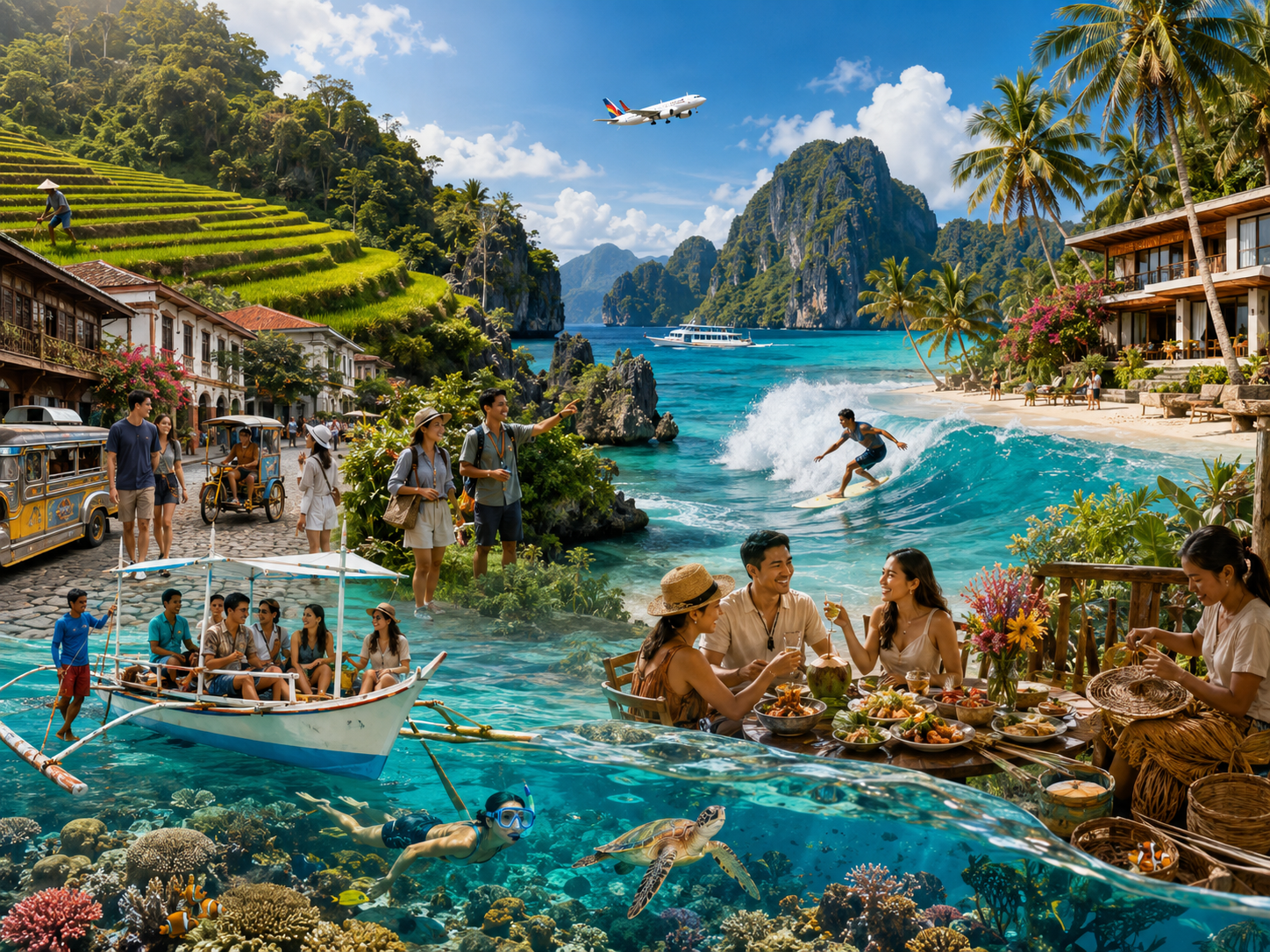
The modernization of the tourism industry in the Philippines has been strongly influenced by Filipino businesses. Natural attractions may bring attention to the country, but local companies create the systems that allow tourism to grow. They provide flights, hotels, tours, restaurants, digital services, retail products, and cultural experiences. Their contribution has made tourism more organized, more accessible, and more connected to local communities.
A major area of change is travel access. The geographic structure of the Philippines makes transportation especially important. Local airlines, ferry services, van operators, buses, and boatmen help tourists move between islands and provinces. Affordable flights and wider route networks have encouraged weekend travel, domestic vacations, and multi-destination trips. This benefits not only well-known areas such as Boracay and Palawan but also emerging destinations that rely on better connectivity to attract visitors.
Filipino hospitality companies have also raised the quality of tourism services. Hotels and resorts developed by local groups offer different levels of comfort, from simple rooms to premium beachfront properties. Many of these businesses incorporate Filipino design, local materials, regional food, and community employment. This gives destinations a stronger sense of place. Instead of offering only generic accommodation, local companies create spaces that reflect the culture and character of the Philippines.
Another important factor is the rise of digital tourism services. Filipino entrepreneurs use online marketing, social media, booking systems, and mobile payments to reach customers. A small travel company can now advertise packages through Facebook, Instagram, TikTok, or its own website. Guests can compare prices, read reviews, book rooms, arrange airport transfers, and pay digitally. This level of convenience has changed tourist expectations and pushed local businesses to become more professional and responsive.
Local companies are also helping diversify the tourism product. The Philippines is no longer promoted only as a beach destination. Businesses now package experiences around food, history, wellness, adventure, diving, surfing, farm life, religious heritage, and indigenous culture. In places such as Cebu, Ilocos, Bohol, Siargao, Palawan, and the Cordilleras, local operators provide activities that introduce tourists to regional identity. This diversification makes the industry more resilient because destinations are not dependent on only one type of visitor.
Community participation is another major part of the transformation. Many tourism services depend on local guides, drivers, cooks, artisans, fishermen, farmers, performers, and small vendors. When local companies involve residents, tourism becomes a source of livelihood rather than an outside-controlled activity. Community-based tourism can also encourage pride in local heritage, because residents see that their language, food, stories, crafts, and traditions have economic and cultural value.
Sustainable tourism is increasingly important for Filipino businesses. Overdevelopment, pollution, and overcrowding can damage destinations if not properly managed. Some local resorts and tour operators have started adopting greener practices, such as reducing single-use plastics, supporting reef protection, sourcing food locally, and educating tourists about responsible behavior. These efforts are essential because the beauty of the Philippines is also its main tourism capital.
Filipino companies are transforming tourism by combining local knowledge with business innovation. They understand the challenges of island travel, the value of community relationships, and the importance of authentic experiences. Through their work, tourism in the Philippines is becoming more inclusive, experience-driven, and capable of supporting long-term national development.