
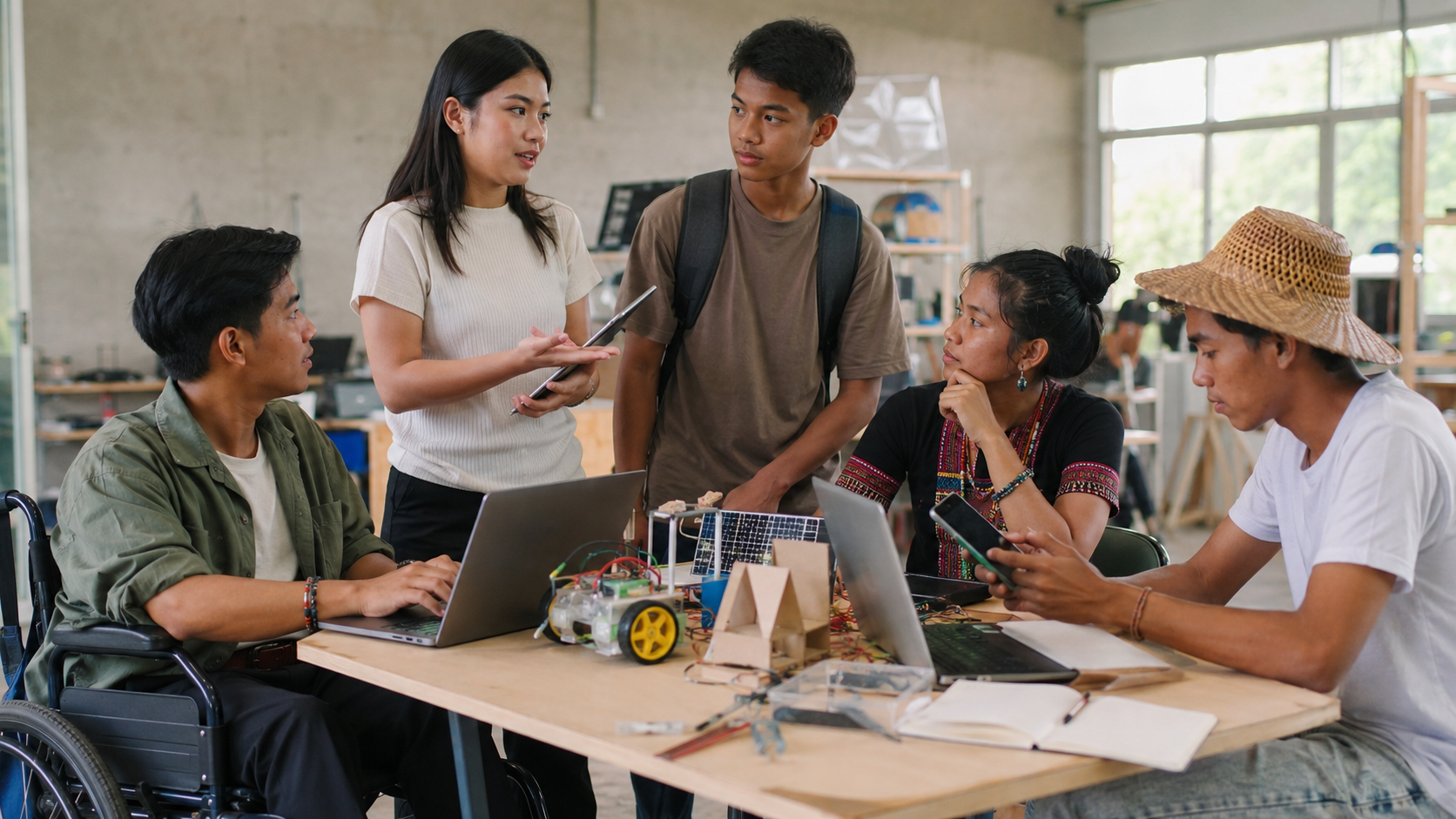
Philippine universities produce thousands of research projects, engineering prototypes, software systems, and scientific studies. Yet only a limited number become sustainable commercial products.
Technology business incubators can help close this gap. By connecting academic research with entrepreneurship, incubators give students and researchers an environment in which they can test whether an invention has real market value.
Why Strong Research Does Not Always Become a Business
Academic projects are frequently evaluated according to technical performance, originality, or research methodology. Commercial products face a different test: customers must be willing to use and pay for them.
A student team may develop an impressive agricultural sensor but overlook manufacturing costs, maintenance requirements, distribution, or farmers’ ability to pay. A healthcare platform may function correctly but struggle to meet privacy standards or integrate with existing clinic procedures.
Incubators help innovators investigate these issues before investing heavily in expansion. They encourage teams to interview users, calculate costs, identify competitors, protect intellectual property, and develop realistic revenue models.
The Role of DOST-Supported Incubation
The Department of Science and Technology has supported technology business incubation and research commercialization through agencies such as the Philippine Council for Industry, Energy and Emerging Technology Research and Development.
Information on its innovation and technology programs is available through the official DOST-PCIEERD website.
Government-supported incubators are particularly important because many research-based startups require longer development periods than ordinary digital businesses. Products involving hardware, biotechnology, clean energy, or advanced manufacturing may need laboratories, technical certification, and extensive testing before reaching customers.
Private investors may consider these projects too early or too risky. University and government incubation can help teams reach the stage at which commercial funding becomes more realistic.
Mentorship Must Be Practical, Not Ceremonial
Effective incubators provide more than motivational talks. Founders need direct guidance from people who have managed product launches, negotiated contracts, hired employees, handled taxes, and recovered from business failures.
Mentors should challenge assumptions rather than simply praise ideas. They may ask whether a startup has spoken to enough customers, whether its pricing covers operating costs, or whether the founding team possesses the skills required to deliver the product.
Industry partnerships are equally valuable. A manufacturing company can test an engineering solution, while a hospital can evaluate a health technology product. These pilot partnerships give founders evidence that their ideas can operate in real conditions.
Universities Need Better Incentives for Commercialization
Researchers may hesitate to establish companies when university policies regarding intellectual property, revenue sharing, or faculty participation are unclear.
Institutions need transparent rules explaining who owns inventions, how licensing agreements work, and whether professors can participate in startup operations. Without these policies, promising technologies may remain unused.
Students should also be allowed to treat startup development as serious academic work. A validated prototype, customer pilot, or commercialization plan may demonstrate learning more effectively than a conventional written examination.
Turning Filipino Knowledge Into Economic Value
The Philippines can strengthen its startup ecosystem by making better use of research already being conducted inside universities.
Commercialization does not mean every academic project must become a company. It means researchers should have a clear pathway when their work can solve a practical problem.
Well-managed technology incubators can transform laboratories into sources of employment, investment, and locally developed intellectual property. Their success should be measured not only by the number of startups registered, but also by products adopted, customers served, patents licensed, and companies that remain operational after leaving the university.