
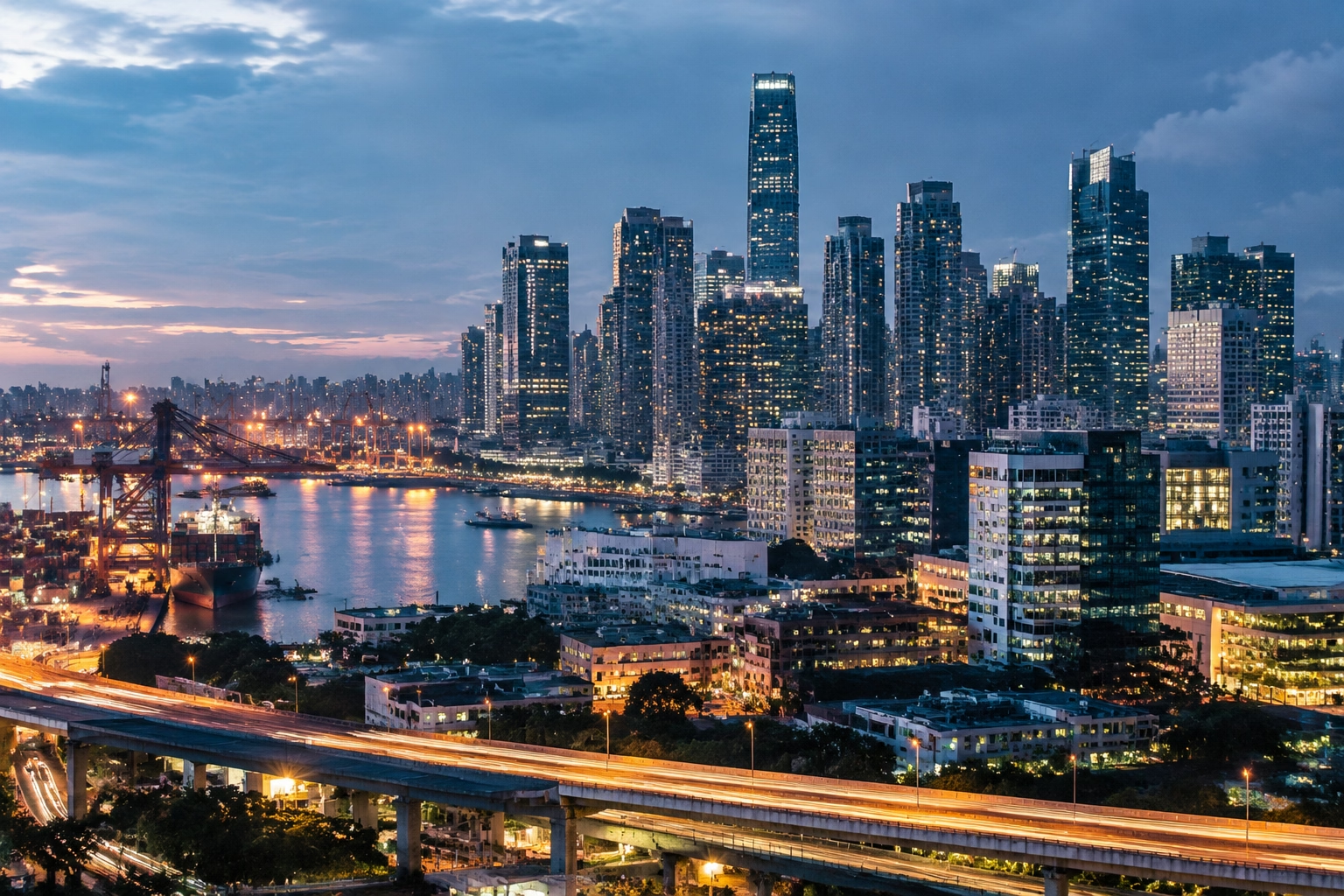
The Philippines is an archipelago of over 7,000 islands, a geographic reality that has historically fragmented its economy. However, the technological infrastructure upgrades completed in 2026 are effectively “shrinking” the distance between its two major tech hubs: Manila and Cebu. Through aggressive 5G deployment, sovereign cloud initiatives, and a welcoming visa policy for remote workers, the country is turning its geographic complexity into a competitive advantage.
The 5G and Fiber Backbone
Connectivity is the lifeblood of a startup ecosystem, and 2026 marks the year the Philippines fully capitalized on its 5G spectrum. In Metro Manila, 5G coverage is now ubiquitous, enabling low-latency applications in autonomous vehicles and telemedicine that were previously impossible.
For Cebu, the shift to 5G and the completion of new submarine fiber cables has eliminated the “island lag.” Data transfer speeds between Cebu and international markets like Singapore and Tokyo are now on par with those in Manila. This has allowed Cebu-based founders to manage global teams and host high-bandwidth data servers locally, removing a significant barrier to entry that existed just three years ago.
The Implementation of the Digital Nomad Visa
One of the most impactful policy changes has been the full implementation of the “Digital Nomad Visa.” Unlike standard tourist visas, this allows foreign tech workers to stay and work legally in the Philippines for up to 12 months. This policy has injected a new level of global expertise into the local scene.
We are seeing nomads cluster in Cebu’s beachside towns like Moalboal and in Manila’s BGC. They bring with them networks from Silicon Valley and Europe, often collaborating with local founders or acting as freelance consultants. This influx is slowly internationalizing the culture of the local startups, raising standards for documentation, code quality, and user experience design.
Sovereign Cloud and Data Localization
Data privacy regulations have tightened across Asia, and the Philippines has responded with the launch of its first “Sovereign Cloud” initiatives. Major global cloud providers have partnered with local data center operators in Manila and Cebu to offer localized data residency.
For startups in the HealthTech and Fintech sectors, this is a game-changer. It allows them to comply with the strict Data Privacy Act of 2012 (and its 2025 amendments) without sacrificing the scalability of modern cloud architecture. This infrastructure investment is specifically attracting foreign startups that need a regional base for data processing in Southeast Asia.
The “Metro Cebu” Expansion
Infrastructure in Cebu has expanded beyond the traditional IT Park. The concept of “Metro Cebu” has taken hold, with tech offices spreading to Mandaue and Lapu-Lapu. New transit lines connecting these areas have eased traffic congestion, making the entire province feel like a connected innovation district.
This physical expansion allows for a diversity of work environments. Startups can choose a high-rise in the city center or a creative studio overlooking the ocean, providing a quality of life that is becoming a major selling point for hiring top talent away from the congested streets of Jakarta or Bangkok.
The convergence of policy, infrastructure, and connectivity in 2026 has created a fluid ecosystem. A developer in Cebu can work on a server in Manila, collaborating with a designer in Europe, all while maintaining the lifestyle that only the Philippines can offer.