
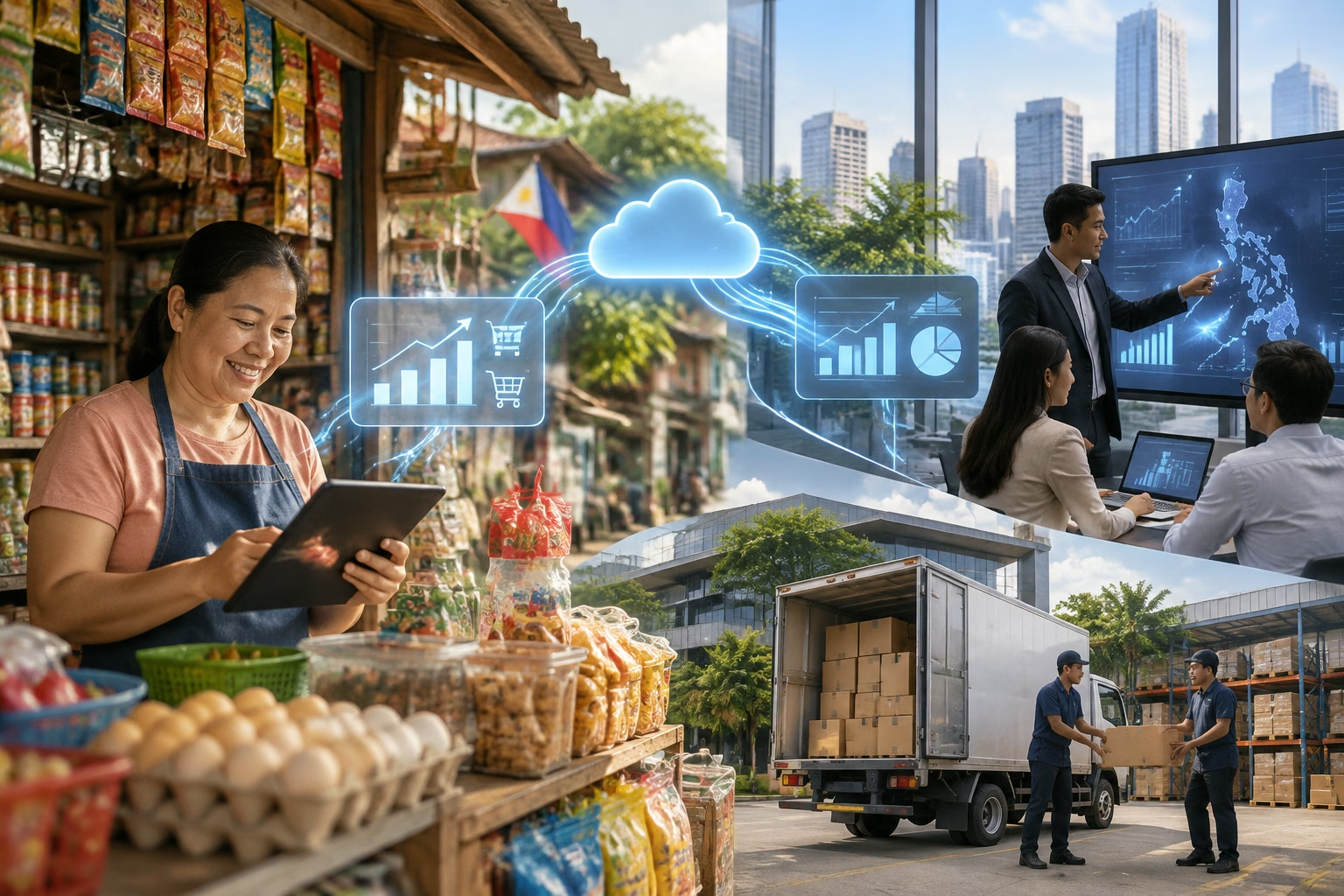
Access to affordable capital has long been the Achilles’ heel of Philippine SMEs. Traditional banks often view these businesses as high-risk due to a lack of audited financial statements and collateral. However, the year 2026 marks a turning point where collaboration with large corporations is emerging as the most effective collateral an SME can possess.
The Rise of Supply Chain Financing
Supply Chain Financing (SCF) is set to revolutionize liquidity in the Philippine market. In this model, a large, creditworthy corporation vouches for its smaller suppliers. When an SME issues an invoice to a large company, the bank can lend against that receivable at a lower interest rate because the risk is now tied to the credit rating of the big corporation, not the SME. In 2026, we expect major Philippine banks like BDO and BPI to deepen their SCF platforms, offering digital onboarding for SMEs that are endorsed by their corporate clients. This immediate access to working capital allows SMEs to take on bigger orders without the fear of cash flow crunches.
Embedded Finance in Corporate Ecosystems
Beyond formal banking, large corporations are becoming quasi-financial institutions. E-commerce giants like Lazada and Shopee are utilizing their data on seller performance to offer “instant loans” directly within their seller apps. If an SME has a consistent sales history on these platforms, they can access capital for inventory in seconds. By 2026, this model is expanding. Fast-food chains and retail conglomerates are partnering with fintech startups to offer similar credit lines to their franchisees and sub-distributors, using business performance data as the primary underwriting criterion.
De-Risking Investment Through Mentorship
Capital alone is insufficient; financial literacy is required. Collaborations in 2026 are increasingly pairing funding with mentorship. Large accounting firms, as part of their corporate responsibility or business development, are offering pro-bono financial structuring advice to SMEs within specific corporate supply chains. This ensures that the loans taken are utilized for growth and not for covering operational losses. When SMEs demonstrate sound financial management, they become lower-risk partners, which in turn reduces the cost of goods for the large corporation—a cycle of fiscal health.
Data from the Bangko Sentral ng Pilipinas (BSP) highlights the ongoing efforts to increase SME lending. The BSP’s initiatives for 2026 focus heavily on digitizing payments and encouraging banks to utilize alternative data for credit scoring, directly supporting these corporate-linked models. More information is available at https://www.bsp.gov.ph/.
This integration into the financial mainstream, facilitated by corporate partners, is transforming the Philippine SME from a cash-strapped entity into a viable, bankable, and scalable enterprise in 2026.