
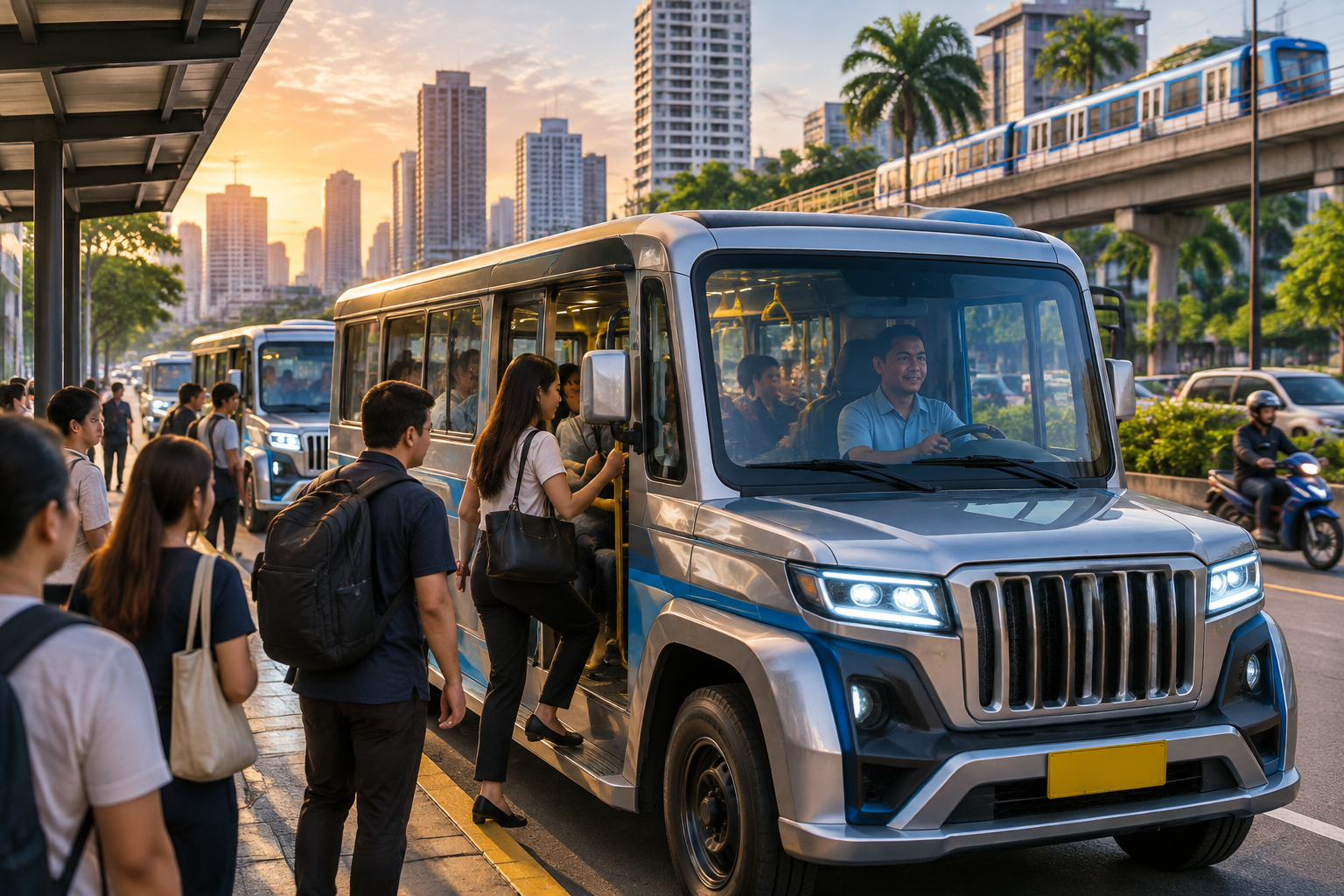
The Philippines’ transport sector is undergoing a quiet but significant transformation. Driven by climate commitments, fuel price volatility, and government incentives, transport companies are increasingly investing in electric vehicles (EVs)—from electric jeepneys and e-trikes to electric buses and ride-hailing fleets.
The Electric Jeepney Wave
Electric jeepneys (e-jeepneys) have moved from novelty to necessity under the Public Utility Vehicle Modernization Program. By 2026, thousands of e-jeepneys operate across Metro Manila, Baguio, and other urban centers. These units, manufactured by local assemblers like Sarao Motors and emerging EV startups, offer lower operating costs and zero tailpipe emissions.
Cooperatives cite fuel savings as a primary driver. An e-jeepney can travel 100 kilometers on a single charge at a fraction of the cost of diesel. However, upfront costs remain high—typically 20-30% more than their diesel counterparts.
E-Trikes and Last-Mile Connectivity
Electric tricycles (e-trikes) are gaining traction in cities like Mandaluyong, Pasig, and Davao. These three-wheelers serve last-mile routes, ferrying passengers from residential areas to main transport hubs. The Department of Energy’s e-trike program, though scaled back from its original ambitions, continues to support deployment through subsidies and technical assistance.
Driver and Passenger Benefits
For drivers, e-trikes offer lower maintenance costs and exemption from number-coding schemes. For passengers, they provide a quieter, cleaner alternative to traditional tricycles.
Charging Infrastructure: The Missing Link
The biggest obstacle to EV adoption in public transport is charging infrastructure. While Metro Manila has seen a rise in charging stations—led by private firms like Pilipinas Shell and Meralco—coverage remains uneven. Cooperatives in provinces often struggle to access reliable charging, limiting route flexibility.
In response, some transport companies are investing in their own charging depots. This vertical integration reduces dependency on public infrastructure but requires significant capital.
Policy Incentives and Regulatory Support
Government policies have accelerated the shift. The Electric Vehicle Industry Development Act (EVIDA) provides incentives for EV manufacturers and users, including tax exemptions and priority registration. The Land Transportation Franchising and Regulatory Board (LTFRB) has also streamlined accreditation for electric PUVs.
For the latest regulatory updates, the LTFRB website (https://ltfrb.gov.ph) remains a key resource.
The Business Case for Green Transport
For transport operators, the business case for EVs is strengthening. Fuel savings, lower maintenance, and growing consumer preference for sustainable options make electric fleets attractive. Ride-hailing platforms have also begun integrating EVs into their fleets, responding to both regulatory pressure and rider demand.
Yet, challenges remain. Battery technology, range anxiety, and the lack of a robust second-hand market for EVs complicate long-term planning. Financing institutions, while increasingly supportive, still view EV loans as higher-risk.
A Greener Future on the Horizon
As 2026 progresses, the Philippines’ green transport transition is gaining momentum. With supportive policies, private sector investment, and growing public awareness, the shift toward electric mobility appears irreversible. The question is no longer whether the Philippines will electrify its transport fleet, but how quickly—and how equitably—that transition will unfold.