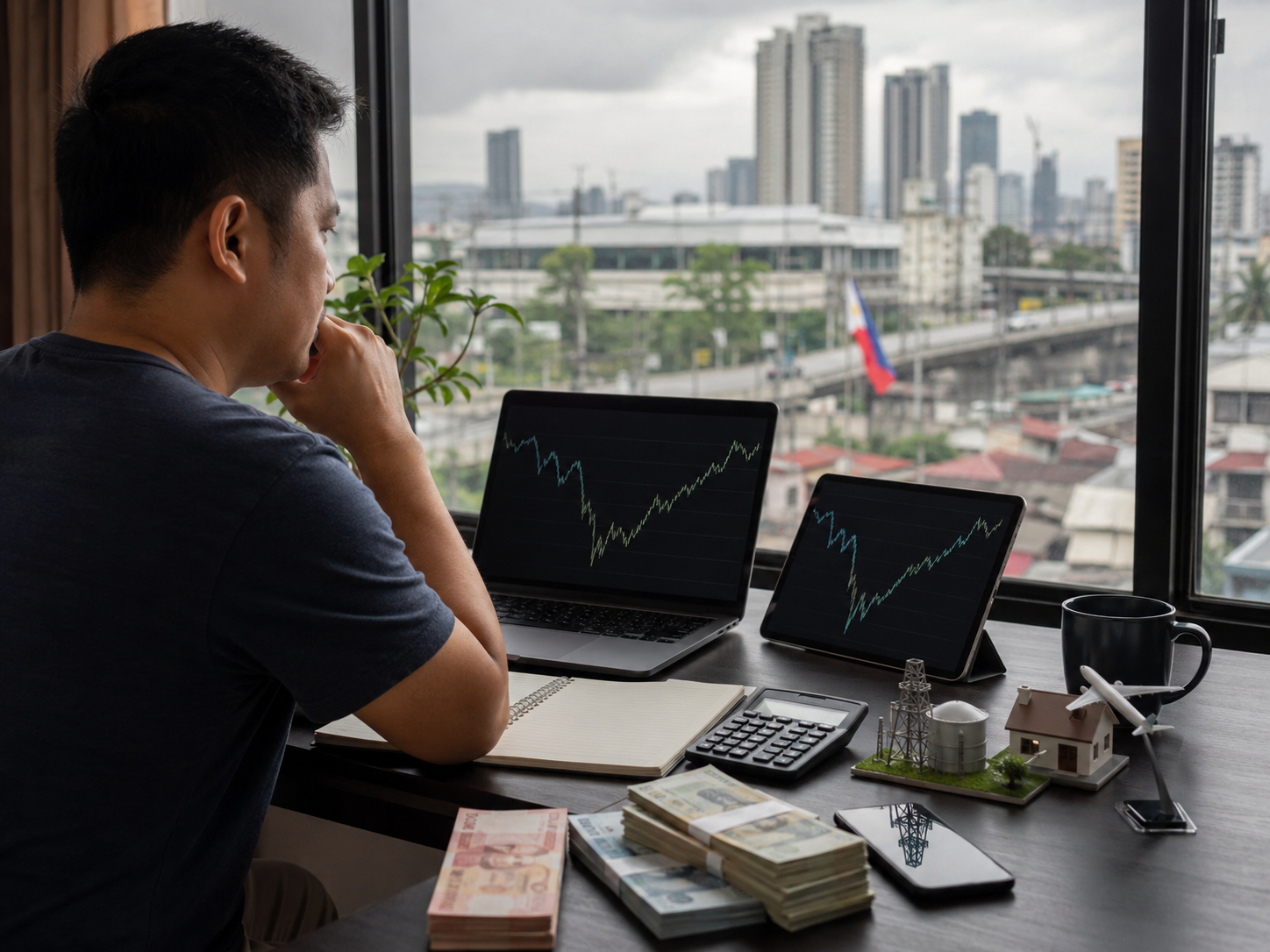
When the Philippine Stock Exchange Index rebounded from its March 2020 low, many businesses were still operating under restrictions. Corporate earnings remained weak, unemployment was elevated, and the timing of a full reopening was uncertain.
The recovery was partly driven by expectations, but it was also supported by monetary policy and financial-system liquidity.
The Bangko Sentral ng Pilipinas reduced its policy rate by a total of 200 basis points in 2020, bringing the overnight reverse repurchase rate to 2 percent. It also implemented measures intended to support credit and stabilize financial markets.
Policy announcements and historical rate decisions are available through the BSP monetary policy decisions page.
Why Lower Interest Rates Supported Share Prices
Interest rates influence stock valuations in several ways. When returns on deposits and fixed-income securities decline, investors may become more willing to consider equities.
Lower rates can also reduce borrowing costs for companies, support consumer spending, and improve the present value of expected future earnings. This does not guarantee that stock prices will rise, but it can make equities relatively more attractive.
During the pandemic, global central banks introduced similar measures. Large amounts of international liquidity moved through financial markets, including emerging economies such as the Philippines.
Liquidity Could Not Repair Every Business
Monetary support helped stabilize the financial system, but it could not fully replace lost revenue for companies affected by lockdowns.
An airline could borrow money at a lower rate, but it still needed passengers. A shopping mall could refinance debt, but it still depended on tenants and customer traffic. A hotel could extend loan maturities, but occupancy remained necessary for long-term survival.
This distinction is essential. Liquidity can give a company time, while profitability determines whether the company can eventually recover.
Investors Began Pricing in Reopening
Stock markets typically react before official economic data confirms an improvement. Once investors believed lockdown measures would eventually ease and vaccines would become available, they began purchasing shares associated with recovery.
Property developers, banks, consumer companies, and infrastructure-related businesses attracted renewed interest. Their prices reflected expected future conditions rather than the weak economic data being reported at that moment.
This explains why investors who waited for every indicator to improve may have missed a significant part of the rebound.
However, early recovery trades also carried risk. Businesses reopened at different speeds, and some faced permanent changes in demand. Investors still needed to evaluate whether projected earnings were realistic.
Fiscal and Monetary Policies Worked Together
Government spending, emergency assistance, credit guarantees, and health-related expenditures also influenced market confidence. Monetary policy alone could not address a public-health crisis, but coordination between fiscal and monetary authorities reduced the probability of a deeper financial breakdown.
The episode showed investors that policy analysis is an important part of stock selection. Interest rates, inflation, government borrowing, currency conditions, and banking-system liquidity can all influence company valuations.
What the Policy Response Teaches Investors in 2026
The pandemic demonstrated that major market recoveries can begin while economic conditions still appear difficult. Investors should therefore monitor policy direction as well as company results.
At the same time, they should avoid assuming that supportive monetary policy will rescue every weak business. Companies with excessive debt, poor cash flow, or outdated business models may continue to struggle even when borrowing conditions improve.
For Philippine investors in 2026, the practical lesson is to connect macroeconomic policy with company-level analysis. Interest rates can change the environment, but management quality, financial strength, and sustainable demand determine which businesses can convert that environment into long-term shareholder value.