
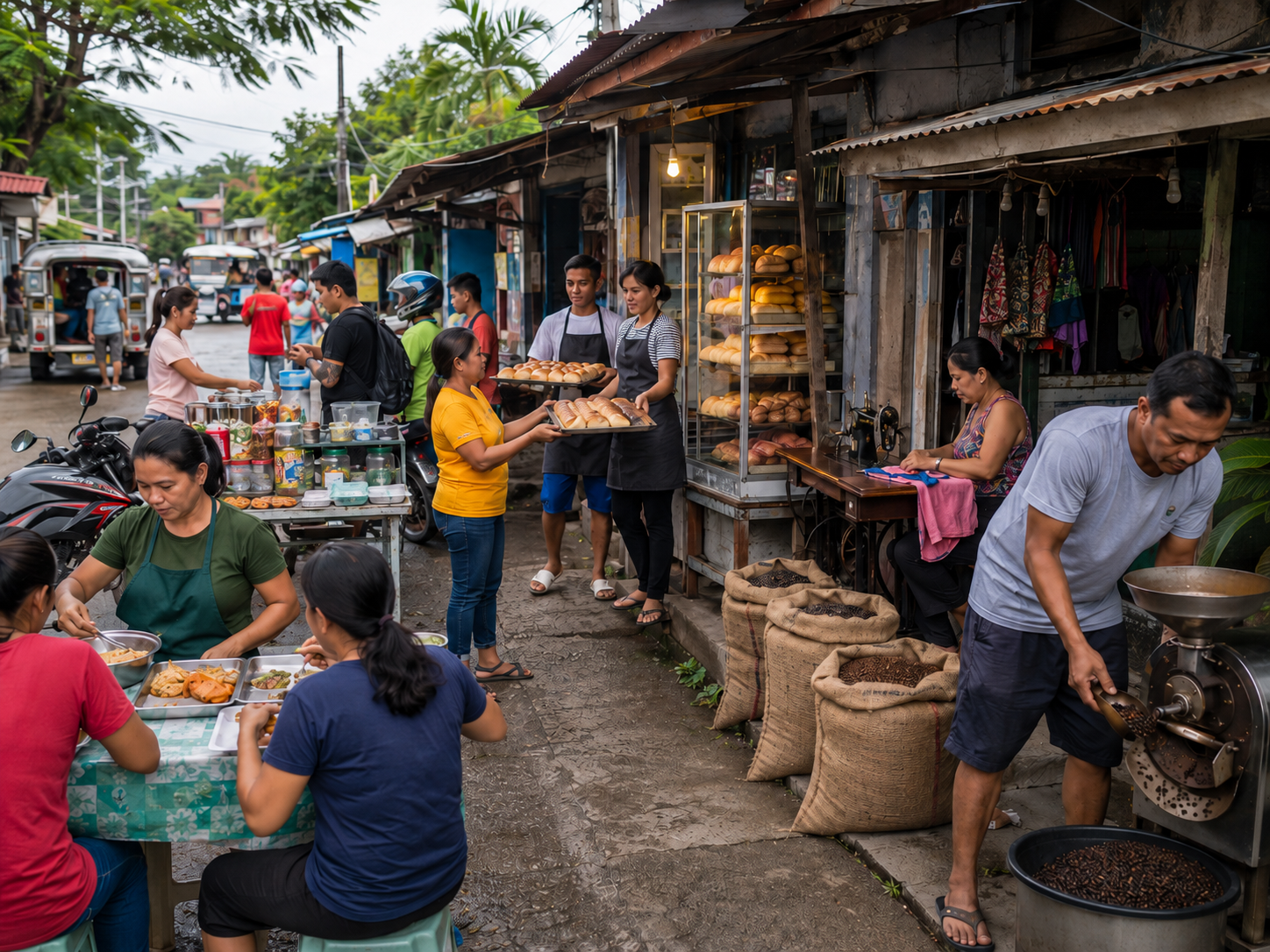
Moving Farmers Up the Value Chain
Many Filipino farming communities remain poor not because they lack production but because they sell raw commodities at low prices to traders, who capture most of the value in processing and marketing. Agri-based micro, small, and medium enterprises address this imbalance by converting fresh produce into higher-value goods: cassava into chips, coconut into virgin oil, cacao into tablea, and fruit into jams. These enterprises create local jobs in sorting, cooking, packaging, and quality control while increasing the income retained by farming households.
Cooperatives as Rural Value Chain Anchors
In the Davao region, cacao farmer cooperatives have invested in post-harvest facilities and small-scale chocolate processing lines with support from the Department of Trade and Industry’s One Town One Product program. See DTI OTOP. The OTOP initiative encourages each municipality to identify a flagship local product and provides assistance in design, marketing, and compliance. By pooling resources, cooperatives can purchase equipment, negotiate better packaging costs, and access institutional buyers such as hotels and export consolidators. This collective approach lowers transaction costs and spreads risks among members.
Impact on Food Security and Nutrition
Agri-based MSMEs also strengthen community food security by reducing post-harvest losses. In many provinces, up to 30 percent of fruits and vegetables spoil before reaching markets due to poor handling. Small processing facilities preserve surplus harvests as dried products or shelf-stable sauces, ensuring that communities have access to food year-round. This is particularly important in island provinces where typhoons can disrupt supply chains. Local processing reduces dependence on imported processed foods and keeps dietary diversity alive.
Policy Gaps and Financing Needs
Despite their potential, agri-based MSMEs face high capital costs for machinery, limited access to cold storage, and inconsistent power supply. Many cooperatives still rely on grants or subsidized loans because commercial banks consider agriculture risky. In response, government agencies and development partners have expanded shared service facilities where small processors can use equipment without owning it. These facilities lower entry barriers and enable more farmers to participate in value-added production.
By turning raw harvests into market-ready goods, Philippine agri-based MSMEs are not just building businesses—they are rebuilding the economic foundation of rural municipalities. Their growth will determine whether farming communities can escape the low-income trap and achieve lasting food sovereignty.