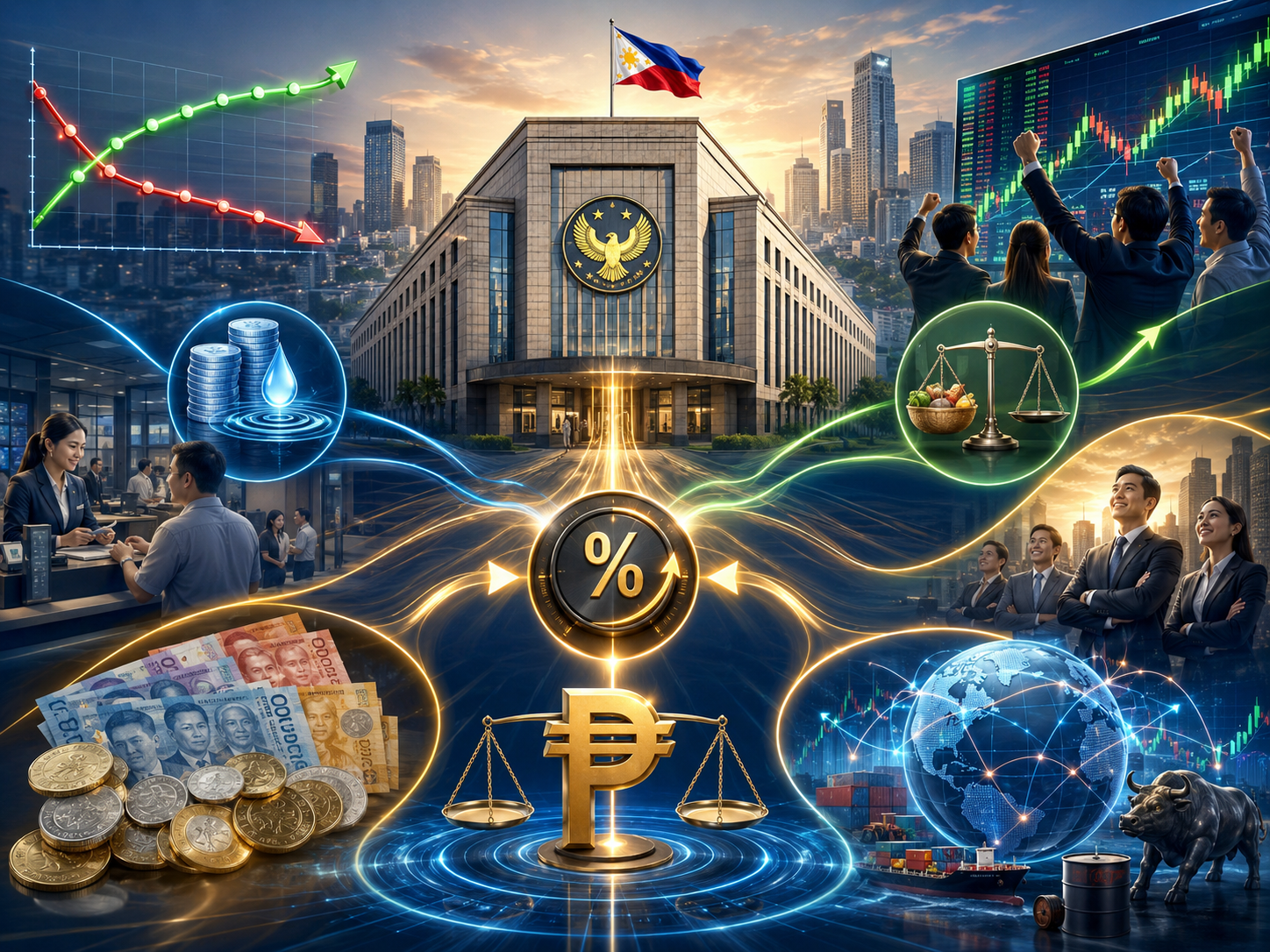
Bangko Sentral ng Pilipinas monetary policy is one of the most important drivers of financial market conditions in the Philippines. The BSP uses its policy tools to influence inflation, liquidity, credit growth, and confidence in the economy. Although its main target is price stability, its decisions quickly pass through to the bond market, equity market, banking system, and foreign exchange market. This makes central bank policy highly relevant to investors, businesses, lenders, and government policymakers.
The most closely watched policy tool is the central bank’s interest rate. When inflation rises above comfortable levels, the BSP may raise rates to slow spending and reduce price pressure. This action affects the entire interest-rate structure in the economy. Treasury bill and government bond yields usually adjust upward because investors expect tighter financial conditions. Higher yields may attract income-seeking investors, but they can also reduce the value of bonds already held in portfolios. For this reason, monetary tightening can create both opportunities and risks in the Philippine fixed-income market.
Equities are also sensitive to changes in monetary conditions. A high-rate environment can make stocks less attractive because investors can earn better returns from safer assets such as government securities or bank deposits. At the corporate level, higher borrowing costs can weaken expansion plans and reduce earnings growth. Companies in capital-intensive sectors are often more exposed because they need continuous financing. When the BSP shifts toward lower rates, financial conditions become easier, which can improve investor optimism and encourage stronger stock-market activity.
The peso is another channel through which monetary policy affects the financial system. If Philippine interest rates rise relative to other countries, foreign investors may become more willing to hold peso assets. This can support the currency and reduce imported inflation. However, the peso does not move according to BSP policy alone. It is also influenced by the U.S. dollar, global risk appetite, oil prices, imports, exports, and remittances from overseas Filipino workers. The BSP’s credibility is important because markets are more likely to trust the peso when inflation expectations are well managed.
Banks are central to the transmission of monetary policy because they connect BSP decisions with households and businesses. When the central bank changes policy rates, commercial banks adjust lending and deposit rates. This affects mortgages, business credit, personal loans, and corporate funding costs. A tighter policy stance can slow credit expansion, while an easier stance can encourage borrowing. Reserve requirements also matter because they affect how much liquidity remains available in the banking system. Lower requirements can support lending, while higher requirements can absorb excess liquidity.
Market expectations are equally important. Investors carefully examine BSP announcements, inflation projections, and policy guidance. A central bank that communicates clearly can reduce uncertainty and help markets price risks more efficiently. Unexpected decisions, however, may lead to sudden movements in bond yields, stock prices, and the exchange rate.
In the Philippine context, BSP monetary policy works as a stabilizing mechanism and a market-moving force. It affects the cost of capital, the supply of credit, currency stability, and investor behavior. Understanding its influence helps explain why financial markets often react strongly to inflation data, policy meetings, and statements from central bank officials.